
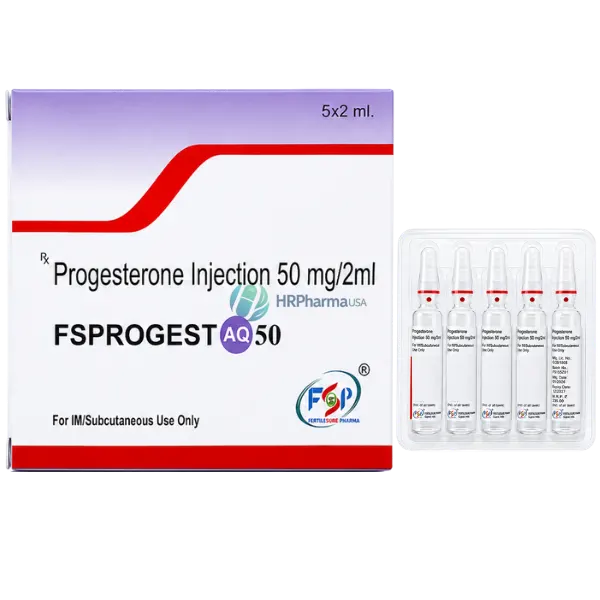
Progesterone 50 mg Injection (Generic)
Progesterone 50 mg Injection (Generic) is a prescription progesterone shot used to support hormone levels during fertility cycles or when periods stop due to low progesterone, as directed by a clinician.
| Active Ingredient: | Progesterone |
|---|---|
| Indication: | Female infertility, Hormone replacement therapy |
| Manufacturer: | Sanzyme Biologics (P) Ltd. |
| Packaging: | 1 ml in 1 vial |
| Strength: | 50mg |
| Delivery Time: | 6 To 15 days |
Progesterone 50 mg Injection (Generic)
| Variant | Price | Units | Quantity | Add to Cart |
|---|---|---|---|---|
| 10 Injection/s | $30.00 | $3 / Injection | ||
| 20 Injection/s | $48.00 | $2.4 / Injection | ||
| 30 Injection/s | $69.00 | $2.3 / Injection |
What is Progesterone 50 mg Injection (Generic)
Progesterone 50 mg Injection (Generic) is an injectable form of progesterone, a hormone the body naturally makes. Progesterone helps regulate the menstrual cycle and supports the uterine lining. When progesterone levels are too low, some people may need prescription progesterone to restore hormonal balance for a specific medical goal.
This product is commonly discussed in fertility care, including luteal phase support, but it may also be prescribed for certain hormone-related menstrual problems. The exact reason it is used depends on your diagnosis, lab results, and treatment plan.
How it works in the body
Progesterone 50 mg Injection (Generic) helps raise progesterone levels when your body isn’t making enough on its own. Adequate progesterone supports the changes in the uterine lining needed for normal cycle timing. In fertility treatment plans, progesterone support is often used to help prepare and maintain the uterine lining during tightly scheduled cycles.
Keep in mind, progesterone therapy is not one-size-fits-all. Your clinician chooses the dose, timing, and length of treatment based on your cycle, ultrasound findings, bloodwork, and response to treatment.
Common reasons a clinician may prescribe it
- Progesterone support in assisted reproduction protocols (for example, IVF luteal phase support)
- Certain cases of secondary amenorrhea, meaning periods that stop for a time due to hormone imbalance
- Abnormal uterine bleeding patterns when the cause is believed to be hormonal and other causes have been evaluated
How it is given
Progesterone 50 mg Injection (Generic) is typically given as an intramuscular injection, meaning it is injected into a muscle. Some patients receive injections in a clinic, while others may be trained to give injections at home. The injection schedule can be daily or on specific days, depending on the plan.
Do not change the dose or schedule on your own. In fertility care, timing can matter a lot, and you should make adjustments only with your clinician’s instructions.
Dosing basics (what to expect)
- Your diagnosis and goals of therapy
- How your body responds to treatment
- Whether progesterone is being used with other medications (for example, estrogen therapy or fertility medications)
- Bloodwork or ultrasound monitoring used by your clinician
Available strengths and other dosage forms
Progesterone 50 mg Injection (Generic) refers to a 50 mg strength (often labeled as 50 mg/mL). Availability can vary by manufacturer and supply, so always check the product label.
Other progesterone strengths or forms you may see prescribed include:
- Progesterone Injection 100 mg/mL (another commonly used injectable strength)
- Oral micronized progesterone capsules (often 100 mg or 200 mg)
- Vaginal progesterone options such as gels, suppositories, or inserts (strengths vary by product)
Possible side effects
- Soreness, swelling, or irritation at the injection site
- Sleepiness or feeling tired
- Breast tenderness
- Bloating
- Headache
- Mood changes
- Trouble breathing, chest pain, or coughing blood
- Swelling, warmth, or pain in one leg
- Sudden severe headache, fainting, weakness, or trouble speaking
- Vision changes
- Severe allergic-type symptoms like hives or facial swelling
Warnings and precautions to know before starting
- Blood clots, stroke, or certain heart and blood vessel conditions
- Breast cancer or other hormone-sensitive cancers
- Liver disease
- Unexplained vaginal bleeding
- Severe migraine with neurologic symptoms
Medication interactions (what to mention)
- Seizure medications
- Certain antibiotics or antifungals
- Herbal products and supplements
Storage and handling
Storage directions can vary by manufacturer, so follow the label instructions on your specific product. In general, injectable hormone products are commonly stored at controlled room temperature and protected from excess heat and light.
Do not use the vial if you notice contamination, unexpected particles, or a change in appearance that is not addressed in the product labeling. If anything looks off, ask a pharmacist before using it. If you are unsure whether the vial is safe to use, contact your clinician or pharmacist before starting the injection.
Substitute options on the market
- Progesterone Injection 100 mg/mL (generic)
- Susten VT 200 Mg (Progesterone) Tablet
- Gestone 100 Injection (Progesterone)
- Progesterone 300 mg (Generic)
- Micronized progesterone capsules (generic versions of Prometrium)
- Progesterone vaginal gel (such as Crinone)
- Progesterone vaginal inserts/suppositories (such as Endometrin, or other progesterone insert products depending on availability)
- Hydroxyprogesterone caproate is a different medication than progesterone, even though the names sound related. It is not a direct substitute.
FAQs
1. Does progesterone injection contain peanut oil or sesame oil?
2. Can I drink alcohol while using Progesterone 50 mg Injection (Generic)?
3. Can I travel with progesterone injection supplies?
4. Will progesterone shots affect a home pregnancy test?
5. Can I switch from injections to vaginal progesterone in the middle of a cycle?
| size | 10 Injection/s, 20 Injection/s, 30 Injection/s |
|---|
Please sign in to My Account to leave a review.
Reviews
There are no reviews yet.