
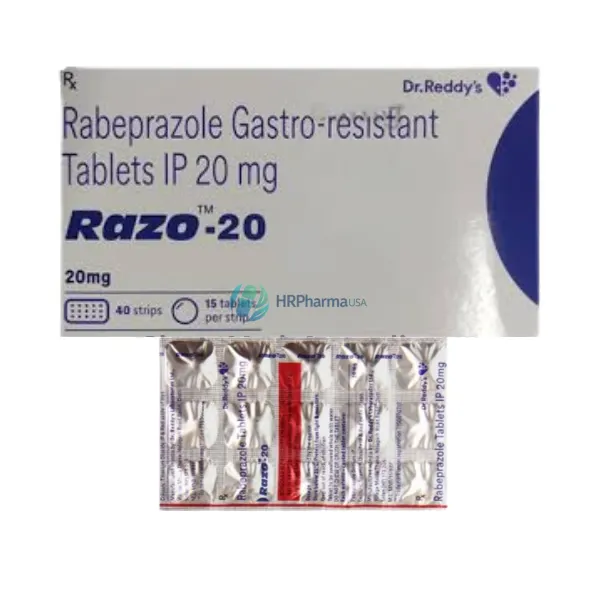
Razo 20 mg (Rabeprazole)
Razo 20 mg (Rabeprazole) is a delayed-release proton pump inhibitor that reduces stomach acid to help treat GERD, frequent heartburn, and acid-related irritation of the esophagus and stomach lining.
| Active Ingredient: | Rabeprazole |
|---|---|
| Indication: | Acidity, Heartburn, Stomach ulcers |
| Manufacturer: | Dr Reddy's Laboratories Ltd. |
| Packaging: | 15 tablets in 1 strip |
| Delivery Time: | 6 To 15 days |
Razo 20 mg (Rabeprazole)
| Variant | Price | Units | Quantity | Add to Cart |
|---|---|---|---|---|
| 60 Tablet/s | $25.00 | $0.42 / Tablet | ||
| 90 Tablet/s | $33.75 | $0.38 / Tablet | ||
| 120 Tablet/s | $42.50 | $0.35 / Tablet |
Biomezole 20 Mg (Omeprazole)
| Variant | Price | Units | Quantity | Add to Cart |
|---|---|---|---|---|
| 60 Capsule/s | $15.00 | $0.25 / Capsules | ||
| 90 Capsule/s | $22.00 | $0.24 / Capsules | ||
| 120 Tablet/s | $28.00 | $0.23 / Capsules |
Omez 10 mg (Omeprazole)
| Variant | Price | Units | Quantity | Add to Cart |
|---|---|---|---|---|
| 60 Capsule/s | $10.00 | $0.17 / Capsules | ||
| 90 Capsule/s | $14.00 | $0.16 / Capsules | ||
| 120 Capsule/s | $19.00 | $0.16 / Capsules |
Introduction About Razo 20 mg (Rabeprazole)
Razo 20 mg (Rabeprazole) is a prescription acid-reducing medicine used when stomach acid is causing ongoing problems like GERD (acid reflux), frequent heartburn, and inflammation or damage in the esophagus.
If you are dealing with burning behind the breastbone, sour taste, regurgitation, or reflux that keeps coming back, rabeprazole is one of the standard treatments clinicians often choose because it targets the source: excess acid production.
What Razo 20 mg (Rabeprazole) is used for
Rabeprazole belongs to a group called proton pump inhibitors (PPIs). It’s commonly prescribed for:
- GERD (acid reflux) and persistent heartburn symptoms
- Erosive esophagitis, where acid has irritated or damaged the esophagus
- Healing and prevention of acid-related ulcers, depending on your diagnosis
- Acid overproduction occurs when clinically appropriate
For some ulcer-related conditions, a PPI may also be used as part of a combination plan decided by a clinician.
How it works
Your stomach has tiny “pumps” that release acid to digest food. Rabeprazole blocks those pumps, so the stomach makes less acid. Less acid usually means less burning, less irritation, and a better chance for inflamed tissue to heal.
What to expect from an acid-reducing PPI
Razo 20 mg is not meant to “coat” the stomach like some quick-relief products. Instead, it works by reducing acid production over time. This is why it’s often used for recurring reflux symptoms, not just occasional heartburn after one heavy meal.
How to take it
Most people are told to take rabeprazole once daily, often before a meal, but your exact directions depend on the condition being treated.
Rabeprazole tablets are typically delayed-release, which means the tablet design matters for how the medicine works. Follow the directions on your prescription label and your clinician’s plan.
Important precautions to know
Before using rabeprazole, it’s worth being upfront about your symptoms and health history. Tell your prescriber if you have:
- Liver problems
- A history of low magnesium or unexplained cramps, weakness, or heart rhythm issues
- Ongoing diarrhea, especially if severe or persistent
- Unexplained weight loss, trouble swallowing, chest pain, or vomiting blood (these symptoms need medical evaluation)
Long-term or repeated PPI use can be appropriate for some people, but it should be rechecked periodically.
Some risks that clinicians watch for with extended use include low magnesium, vitamin B12 deficiency, bone fracture risk, and kidney-related concerns. Your risk depends on your dose, duration, and medical history.
Side Effects of Razo 20 Mg
Many people tolerate rabeprazole well, but side effects can happen. Commonly reported ones include:
- Headache
- Nausea
- Diarrhea or constipation
- Stomach pain, gas, bloating
Seek medical help right away for signs of a serious allergic reaction (rash, swelling, trouble breathing). Also report severe or persistent diarrhea, which can rarely signal an intestinal infection that needs treatment.
Drug interactions and timing concerns
Rabeprazole lowers stomach acid, and that can affect how certain medicines are absorbed. It can also interact with specific prescription therapies. Let your prescriber and pharmacist know if you use:
- Certain antifungal medicines need stomach acid for absorption
- Some HIV medications (acid reducers can interfere with absorption)
- Warfarin or other blood thinners (monitoring may be needed)
- High-dose methotrexate (PPIs may require special planning)
- Digoxin or medicines affected by electrolyte changes
If you take iron, thyroid medicine, or multiple daily medications, it’s smart to ask about spacing and timing so everything works as intended.
Available strengths and dosage forms
Razo is commonly seen as:
- Razo 20 mg (rabeprazole) delayed-release tablets
- Other rabeprazole strengths and forms may also be available depending on the product line and supplier, such as:
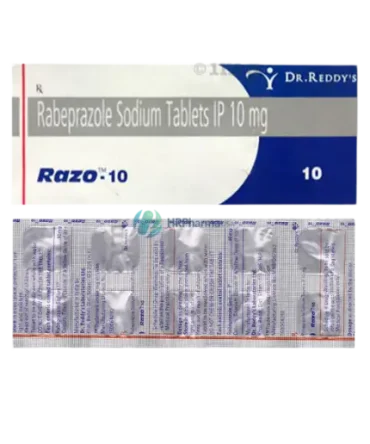
- Rabeprazole 10 mg delayed-release tablets
- Rabeprazole sprinkle/granule formulations (5 mg or 10 mg) are used in some settings for patients who cannot swallow tablets.
- Omesec 20 mg (Omeprazole)
- Omez 10 mg (Omeprazole)
- Omez 40 mg (Omeprazole)
- Omez 20 Mg (Omeprazole)
Your prescriber chooses the strength based on diagnosis, symptom control, and response over time.
Substitutes and alternatives
If Razo 20 mg (Rabeprazole) is not suitable, clinicians may consider other options based on your symptoms, insurance coverage, and interaction profile:
Same active ingredient (rabeprazole):
- AcipHex (brand rabeprazole)
- Generic rabeprazole delayed-release tablets
Other PPIs (different active ingredient, similar purpose):
- Omeprazole (Prilosec)
- Esomeprazole (Nexium)
- Pantoprazole (Pantosec D SR)
- Lansoprazole (Prevacid)
- Dexlansoprazole (Dexilant)
Different class (may help milder or occasional symptoms):
- Famotidine (Pepcid) is an H2 blocker that reduces acid differently
Substitution should be based on medical advice, because dosing, timing, and interaction risks can differ across acid-reducing medicines.
FAQs
1. Can I split or crush Razo 20 mg tablets?
Usually no. Delayed-release tablets are designed to protect the medicine until it reaches the right part of the digestive tract. Altering the tablet can reduce effectiveness. Ask a pharmacist about alternatives if swallowing is difficult.
2. How fast does Razo 20 mg start working?
Some people notice improvement within the first day or two, but full benefit for reflux control or healing irritation can take longer. If symptoms aren’t improving as expected, check in with your prescriber.
3. What should I do if I miss a dose?
Take it when you remember, unless it’s close to your next dose. If it’s close, skip the missed dose and return to your regular schedule. Do not double up unless your prescriber specifically tells you to.
4. Is it safe to take rabeprazole during pregnancy or while breastfeeding?
This is a prescriber-level decision based on your symptoms and history. Share pregnancy or breastfeeding status with your clinician so they can choose the safest option and dosing plan.
5. Can I drink alcohol while taking Razo 20 mg?
Alcohol does not directly “cancel” rabeprazole, but it can worsen reflux symptoms and irritate the stomach. If heartburn is active, reducing alcohol often helps symptom control. Discuss what’s reasonable for your situation with your clinician.
| size | 120 Tablet/s, 60 Tablet/s, 90 Tablet/s |
|---|
Please sign in to My Account to leave a review.


Reviews
There are no reviews yet.