
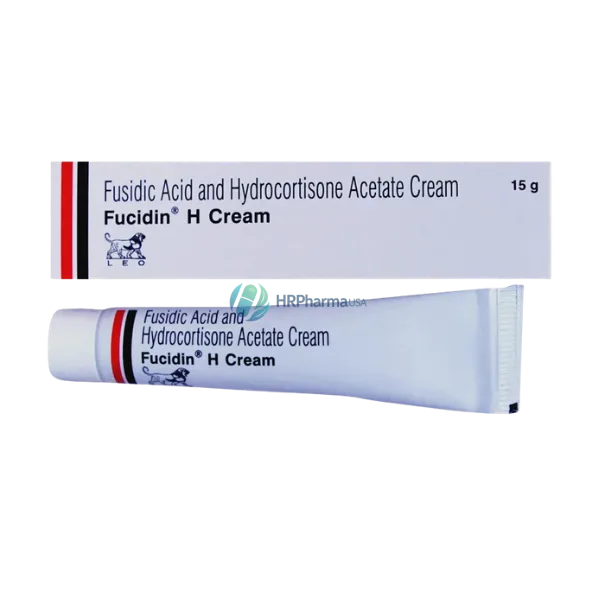
Fucidin H Cream (Fusidic Acid/Hydrocortisone)
| Active Ingredient | Fusidic Acid/Hydrocortisone |
|---|---|
| Indication | Bacterial skin infections |
| Manufacturer | Sun Pharmaceutical Industries Ltd. |
| Packaging | 15 gm in 1 tube |
| Strength | 15 gm |
| Delivery Time | 6 to 15 days |
Fucidin H Cream (Fusidic Acid/Hydrocortisone)
| Variant | Price | Units | Quantity | Add to Cart |
|---|---|---|---|---|
| 3 Tube/s | $6.49 | $6.49 / Cream | ||
| 6 Tube/s | $26.02 | $8.67 / Cream | ||
| 12 Tube/s | $59.77 | $8.53 / Cream |
Fucidin H Cream: what it is and why it’s prescribed
Fucidin H Cream is a combination skin cream used when a rash is doing two things at once: it is inflamed and also infected with bacteria. It pairs fusidic acid, an antibiotic that targets certain skin bacteria (often Staphylococcus species), with hydrocortisone, a mild corticosteroid that helps calm redness, itching, and swelling.
This “two-in-one” approach is usually considered when the skin looks irritated and shows signs of bacterial involvement, such as crusting, oozing, worsening redness, or spreading soreness. It is commonly prescribed for infected eczema and infected dermatitis, where scratching and broken skin can increase the risk of infection.
Because it contains an antibiotic and a steroid, it is generally meant for short-term use and for specific problem areas, not as an everyday moisturizer or long-term maintenance cream.
How Fucidin H Cream works on irritated, infected skin
Fusidic acid (antibiotic)
Hydrocortisone (anti-inflammatory steroid)
Hydrocortisone reduces inflammation in the skin. That matters because inflammation drives many of the symptoms people notice first: itching, burning, redness, thickened patches, and discomfort. When itching drops, people often scratch less, which also helps the skin barrier heal.
Used together, the goal is to control the infection and settle the flare at the same time.
What Fucidin H Cream is commonly used for
- Infected eczema (atopic dermatitis)
- Infected contact dermatitis (after exposure to an irritant or allergen)
- Infected insect bites where inflammation and bacterial infection overlap
- Localized secondary bacterial infection on top of an existing rash
When Fucidin H Cream may not be appropriate
- Fungal infections (like ringworm or yeast-related rashes)
- Viral skin infections (such as herpes-related lesions)
- Acne, rosacea, or perioral dermatitis, where steroids can trigger flares
- Large body areas for extended periods, unless a clinician specifically directs it
How to apply Fucidin H Cream (typical directions)
- Clean and dry the affected area first.
- Apply a thin layer only to the affected skin.
- Use it once or twice daily, depending on the prescription.
- Use it for the shortest effective time. Many courses are limited to about 7 to 14 days.
What to do if it is not improving
What results to expect
People often notice the itch and redness settling first because hydrocortisone works relatively quickly on inflammation. Improvement in signs of infection, like crusting or oozing, may take a bit longer.
If the rash improves quickly, it can be tempting to keep using it “just in case.” With antibiotic-steroid combinations, longer use can increase the risk of side effects and may contribute to antibiotic resistance. It’s usually better to stop when your prescribed course is complete, unless your prescriber says otherwise.
Possible side effects
- Mild burning, stinging, or irritation where applied
- Dryness or peeling
- Worsening redness or rash if the cause is not bacterial
- Skin thinning
- Easy bruising
- Stretch marks
- Small visible blood vessels
- Changes in skin color
Available strengths and pack sizes
- Fusidic acid 2% + hydrocortisone acetate 1%
- 15 g
- 30 g
Substitute options and alternatives on the market
If infection is the main issue (antibiotic only)
- Fusidic acid 2% cream or ointment (without hydrocortisone)
- T-Bact Ointment 5gm (Mupirocin) often used for localized bacterial skin infections
- Retapamulin 1% ointment (used in certain bacterial skin infections)
If inflammation is the main issue (steroid only)
- Cutisoft Cream (Hydrocortisone) 1% cream (often OTC)
- Prescription topical steroids of different strengths (chosen based on body area and severity)
If both infection and inflammation are present (combination therapy)
- Fusidic acid + betamethasone valerate cream (often known in some markets as combination products like Fucicort). This uses a stronger steroid than hydrocortisone and is not interchangeable without medical guidance.
If the rash is actually fungal
- Clotrimazole or terbinafine creams are common options for confirmed fungal infections. Using an antibiotic-steroid combo on fungal rashes can mask symptoms and prolong the problem, so diagnosis matters.
FAQs
1. What should I do if I miss a dose?
2. Can I cover the area with a bandage after applying Fucidin H Cream?
3. Can I shower or swim after applying it?
4. How should I store Fucidin H Cream?
5. Can I use leftover Fucidin H Cream later for a new rash?
| size | 12 Tube/s, 3 Tube/s, 6 Tube/s |
|---|
Please sign in to My Account to leave a review.
Reviews
There are no reviews yet.