
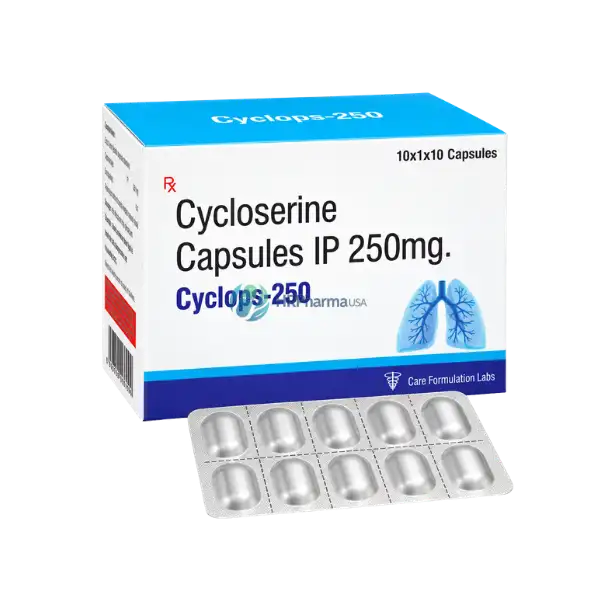
Cyclops 250 Mg (Cycloserine)
Cyclops 250 mg capsules contain cycloserine, a prescription antibiotic used with other medicines for tuberculosis. Treatment requires a TB specialist, an individualized dosing plan, and regular safety monitoring throughout therapy.
| Active Ingredient (Generic Name) | Cycloserine |
|---|---|
| Indication | Tuberculosis (TB) |
| Manufacturer | Care Formulation Labs Pvt Ltd |
| Packaging | 10 capsules in 1 strip |
| Strength | 250mg |
| Delivery Time | 6 To 15 days |
Cyclops 250 Mg (Cycloserine)
| Variant | Price | Units | Quantity | Add to Cart |
|---|---|---|---|---|
| 60 Tablets | $25.00 | $0.42 / Tablet | ||
| 120 Tablet/s | $45.00 | $0.38 / Tablet | ||
| 240 Tablet/s | $80.00 | $0.33 / Tablet |
What is Cyclops 250 mg?
Cyclops 250 mg is a prescription medicine containing cycloserine, an antibiotic used to treat tuberculosis. Each hard gelatin capsule contains 250 mg of the active ingredient. A TB specialist selects it as part of a combination of medicines suited to the patient’s infection and medical history.
Cycloserine can be considered for selected patients with drug-resistant TB or when other treatment options are unsuitable. It requires close supervision because it can cause serious nervous system and mental health effects. Explore our Tuberculosis medicines for related product information.
Cyclops 250 mg uses in tuberculosis treatment
The main use of Cyclops is treatment of tuberculosis alongside other effective anti-TB medicines. Cycloserine has a role in certain longer, individualized regimens for multidrug-resistant or rifampicin-resistant TB. It is not required in every drug-resistant TB regimen.
Treatment choice depends on drug-resistance findings, previous treatment, other illnesses, and medicines that can be used safely together. A persistent cough alone does not establish a TB diagnosis. Evaluation may include chest imaging, sputum testing, and laboratory tests for drug resistance before choosing a treatment plan.
How cycloserine works
Cycloserine interferes with the production of the protective cell wall that susceptible bacteria need. Disrupting this process helps control their growth. Its usefulness depends on whether the infecting bacteria are susceptible.
Although Cyclops is an antibiotic, antibiotics have different uses. Do not choose or exchange them based only on their category or capsule strength.
How to take Cyclops 250 mg capsules
Take Cyclops exactly as directed by your TB clinician. Swallow the capsule with water and follow the prescribed schedule. Check the supplied leaflet and ask your pharmacist about food instructions; high-fat meals can reduce cycloserine absorption, and cycloserine is generally best taken on an empty stomach.
Your other TB medicines may have different administration instructions. Ask for a written schedule showing when to take each medicine. Do not share capsules or use someone else’s prescription, even when their symptoms seem similar.
Dose and treatment duration
The 250 mg strength describes the amount in one capsule. It does not establish the daily dose. Your clinician determines the dose and frequency using factors such as body weight, kidney function, tolerability, and the rest of your TB regimen.
Do not increase, reduce, or stop doses because symptoms improve. TB treatment involves a complete course, often lasting months. Taking medicines irregularly or stopping early can let the infection persist and contribute to further resistance. Report treatment difficulties promptly so your team can help.
Monitoring during treatment
Before and during therapy, your care team may assess kidney function, liver function, blood counts, and your mood and behavior. Cycloserine blood-level testing may also be needed, particularly when kidney clearance is reduced, or toxicity is suspected.
Tell your clinician about new symptoms between appointments. A family member or carer may notice changes in sleep, mood, speech, or behavior before you do. Your team may prescribe pyridoxine, also called vitamin B6, to help reduce peripheral nerve problems. Use the prescribed amount and continue all recommended safety checks.
Possible Cyclops 250 mg side effects
Reported effects include headache, dizziness, drowsiness, tremor, irritability, and tingling or numbness. Report new or worsening symptoms rather than waiting until the next routine visit. Avoid driving or operating machinery if your alertness, coordination, or balance is affected.
Serious reactions can include seizures, hallucinations, severe confusion, depression, and major behavior changes. Seek emergency care for a seizure, difficulty breathing, facial swelling, or thoughts of harming yourself. Other major mental or neurological changes need immediate medical assessment. If you have a serious reaction, do not take another dose until a clinician advises you.
Who should not take cycloserine?
Cycloserine is contraindicated in people with an allergy to it, epilepsy, depression, severe anxiety or psychosis, severe kidney impairment, or excessive concurrent alcohol use. Tell your prescriber about your full medical and mental health history before starting treatment.
Kidney problems are especially important because reduced clearance can allow the medicine to accumulate. Your clinician must assess whether treatment is appropriate and whether you need a different dose or regimen.
Drug interactions and alcohol
Isoniazid and ethionamide can increase cycloserine’s nervous system side effects. These medicines may still appear together in a specialist-designed TB regimen, with appropriate supervision. Do not stop one independently because an interaction is listed.
Give your prescriber a complete list of prescription medicines, nonprescription products, vitamins, and supplements. Avoid alcohol during treatment because it increases seizure risk and can worsen dizziness or drowsiness. Tell the team if avoiding alcohol is difficult so they can arrange support.
Pregnancy and breastfeeding
Tell your TB specialist if you are pregnant, planning pregnancy, or breastfeeding. Treatment requires assessing the benefits and risks of the full regimen. Cycloserine passes into breast milk, so breastfeeding and any monitoring or supplementation for the infant need individual advice. Do not change your TB treatment on your own after discovering a pregnancy.
Missed doses and overdose
Follow the missed-dose instructions your treatment team provides. The right action depends on your schedule and how much time remains before your next dose. Never double a dose to replace a missed dose. Contact the team if you miss doses repeatedly or have a treatment interruption.
If you take too many capsules, obtain urgent medical help immediately, even if you initially feel well. Bring the medicine pack and details of the amount taken.
Storage and product questions
Keep capsules in their original packaging and follow the storage temperature printed on the supplied Cyclops pack. Protect the medicine from moisture, keep it out of children’s reach, and do not use it after its expiry date.
For pack details or availability, contact HRPharmacyUSA. You can also review our Medicine Policy and Regulated Medicines information. Your prescribing clinician decides on treatment, dose changes, and alternative medicines.
FAQs
1. Is Cyclops 250 mg the same as cycloserine
2. Can Cyclops 250 mg treat TB on its own
3. Can I drink alcohol while taking Cyclops
4. Can I stop Cyclops when I feel better
5. Can another strength or brand replace Cyclops 250 mg
| size | 120 Tablet/s, 240 Tablet/s, 60 Tablets |
|---|
Please sign in to My Account to leave a review.




Reviews
There are no reviews yet.