
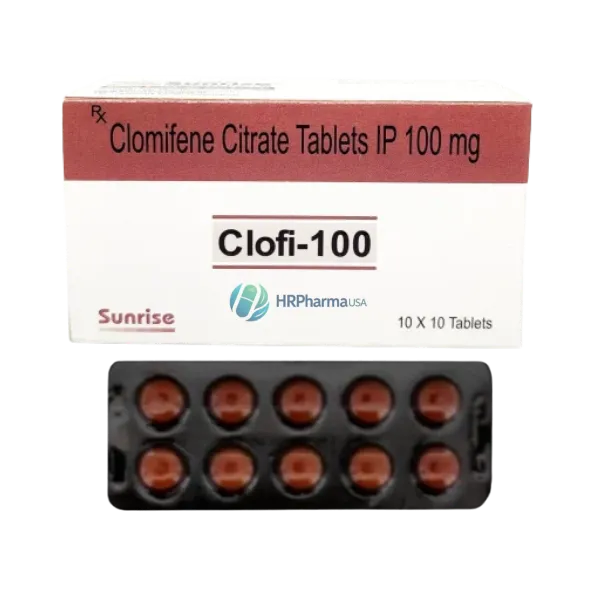
Clofi 100 mg (Clomiphene)
Clofi 100 mg (Clomiphene) is a prescription tablet for certain ovulation problems. It contains clomiphene citrate and is taken in short courses, with fertility testing and monitoring to guide treatment.
| Active Ingredient: | Clomiphene |
|---|---|
| Indication: | Female infertility |
| Manufacturer: | Sunrise Remedies Pvt. Ltd. |
| Packaging: | 10 Tablets in Strip |
| Strength: | 100 mg |
| Delivery Time: | 6 To 15 days |
Clofi 100 mg (Clomiphene)
| Variant | Price | Units | Quantity | Add to Cart |
|---|---|---|---|---|
| 60 Capsule/s | $30.00 | $0.5 / Tablet | ||
| 120 Capsule/s | $49.00 | $0.41 / Tablet | ||
| 180 Capsule/s | $71.63 | $0.4 / Tablet |
Clofi 100 mg (Clomiphene) Tablets for Ovulation
Clofi 100 mg (Clomiphene) is prescribed when a woman needs help ovulating as part of fertility treatment. It contains 100 mg of clomiphene citrate, which encourages the body’s hormone signals to stimulate the ovaries.
The medicine can help when egg release is missing or unpredictable. A clinician usually considers the 100 mg dose after a lower dose has not caused ovulation.
What Does Clofi 100 mg Contain?
Clofi is manufactured by Sunrise Remedies. Each 100 mg tablet contains clomiphene citrate as its active ingredient. It is taken by mouth and belongs to a group of medicines known as ovulatory stimulants.
The strength printed on the carton refers to the medicine in each tablet. The tablet count is separate, so a larger pack does not mean a longer treatment course. Check the label against your prescription, including the strength and quantity supplied. A pharmacist can also check the inactive ingredients if you have a known allergy.
Which Fertility Problems Can It Help With?
Clofi may help when irregular or absent ovulation makes pregnancy difficult. Some women with polycystic ovary syndrome, or PCOS, have this problem. Others need an assessment to find out why their periods or ovulation patterns have changed.
Before prescribing treatment, a clinician may arrange hormone tests and check whether the fallopian tubes are open. A semen analysis for the male partner can help identify another reason pregnancy has not occurred.
These checks matter because releasing an egg is only one step toward pregnancy. Clomiphene does not repair blocked tubes or treat a partner’s sperm problem. Age, other health conditions, and the cause of infertility also affect the outcome.
How It Encourages Ovulation
The brain and ovaries communicate through hormones. Estrogen is part of this feedback system and helps control how much stimulation the ovaries receive.
Clomiphene blocks some estrogen receptors in the brain. In response, the pituitary gland releases more follicle-stimulating hormone, called FSH, and luteinizing hormone, called LH. These signals support the growth of ovarian follicles, the small sacs where eggs develop.
The aim is to help a follicle develop and release an egg. Monitoring shows whether the ovaries are responding as intended.
Taking the Tablets During Your Cycle
Your prescription should explain when to begin your clomiphene course, how much to take, and when to return for checks. Treatment commonly involves one daily dose for five days early in the menstrual cycle. Starting days can differ between treatment plans.
The usual initial dose is 50 mg daily. If this does not trigger ovulation, the clinician may prescribe 100 mg daily for a later course. When the lower dose already produces ovulation, increasing it generally offers no advantage.
Take the tablets at roughly the same time each day. Do not extend the course or take extra tablets because you have not noticed a change. Standard prescribing information does not recommend more than 100 mg daily or a course longer than five days.
Before another course, your clinician should check for pregnancy and any treatment-related ovarian enlargement or cysts. If you miss your period or it’s unusually late, ask your clinic before you restart.
What Happens After the Last Tablet?
Ovulation often follows about five to ten days after the course ends. This is an expected range, rather than a date that applies to everyone. Your clinic will help you plan intercourse or an insemination appointment around your response.
You may have an ultrasound to measure developing follicles and see how many are growing. A progesterone blood test later in the cycle can help confirm whether you released an egg. Symptoms alone cannot reliably show whether the medicine worked.
A treatment review is needed if three courses do not produce ovulation, or if pregnancy has not occurred after three ovulatory courses. Continuing beyond about six total cycles is generally not recommended. Reassessment gives you a chance to discuss whether another approach would be more suitable.
Side Effects Worth Knowing About
Effects You May Notice
- Hot flashes, headaches, nausea, breast discomfort, and bloating can occur. Some women notice mood changes or bleeding outside their usual period. Let the clinic know about symptoms that persist, become hard to manage, or worsen.
- Side effects do not confirm that ovulation has occurred. Equally, feeling no different does not mean the treatment has failed.
Changes in Your Sight
- Stop taking the medicine and contact a clinician promptly if you develop blurred or double vision, flashes, spots, or another change in sight. An eye examination may be necessary.
- Some visual disturbances associated with clomiphene can persist after treatment and may be permanent. Avoid driving while your sight is affected.
Pain, Swelling, or Breathing Problems
- Ovarian hyperstimulation syndrome, known as OHSS, is uncommon with clomiphene but can become serious. Warning signs include increasing abdominal swelling, severe pain, rapid weight gain, repeated vomiting, passing less urine, or shortness of breath. Seek urgent medical assessment, even if you finished the tablets several days earlier.
- Sudden severe pelvic pain also needs urgent attention because an enlarged ovary can twist. Swelling of the face or tongue, or difficulty breathing, requires emergency care.
- Treatment also raises the chance of twins and, less often, triplets or more. Discuss this possibility before starting, including how monitoring may help reduce the risks.
Health Conditions and Other Medicines to Discuss
Clofi should not be taken during pregnancy. It is also unsuitable for someone with an allergy to clomiphene or another ingredient in the tablet.
Other reasons to avoid treatment include:
- Current liver disease or a history of liver dysfunction.
- Vaginal bleeding that has not been explained.
- Ovarian cysts or enlargement unrelated to PCOS.
- Uncontrolled thyroid or adrenal problems.
- A pituitary tumor or certain other diagnosed abnormalities within the brain.
Tell your clinician about uterine fibroids and whether you are breastfeeding. Clomiphene may reduce breast milk production.
Although standard labeling does not identify documented drug interactions, your full medicine list still needs review. Include vitamins, herbal products, and medicines bought without a prescription. Add other fertility treatments and hormones only as part of the clinic’s plan.
Other Strengths and Related Products
The manufacturer also lists Clofi in 25 mg and 50 mg strengths. A lower-strength product may be appropriate for a different prescribed dose.
For example, Clomifene 50 mg contains the same active medicine at half the listed strength of Clofi 100 mg. Confirm any change with the prescriber or pharmacist. Always check tablet strength, the number taken each day, and the number supplied in a pack separately.
When Another Fertility Medicine May Be Considered
The next step depends on the diagnosis and previous response. Switching to another clomiphene brand differs from moving to a medicine that works through a different pathway.
| Siphene 100 mg | Another clomiphene product with a listed 100 mg strength. The pharmacist should confirm the formulation before substitution. |
| Letrozole 2.5 mg | Temporarily reduces estrogen production to encourage ovarian stimulation. It has its own dosing schedule. |
| ZyHMG 75 IU Injection | Contains menotropins, which stimulate the ovaries directly through hormone activity. It requires injections and close monitoring. |
Current fertility guidance for PCOS recommends letrozole first for women who are not ovulating and have no other infertility factors. Clomiphene remains an option in selected circumstances. These treatments should not be exchanged or combined without medical instructions.
Looking After Yourself During Treatment
Write down your tablet dates, bleeding, symptoms, and test appointments. Keep monitoring visits even when you feel well. If several follicles develop, the clinic may advise canceling the cycle and avoiding unprotected intercourse to reduce the risk of a multiple pregnancy.
Pregnancy preparation matters alongside the medicine. CDC guidance recommends 400 micrograms of folic acid daily before pregnancy, although some people need a different amount based on their medical history.
Avoid smoking and alcohol while trying to conceive. Discuss any ongoing health conditions with your care team, and let them know if treatment is becoming emotionally difficult.
FAQs
What if I forget one of the five doses?
Is clomiphene also used in male fertility treatment?
Can the medicine affect the lining of the uterus?
Do I need a special diet while taking it?
Where should I keep the tablets?
| size | 120 Capsule/s, 180 Capsule/s, 60 Capsule/s |
|---|
Please sign in to My Account to leave a review.
Reviews
There are no reviews yet.