
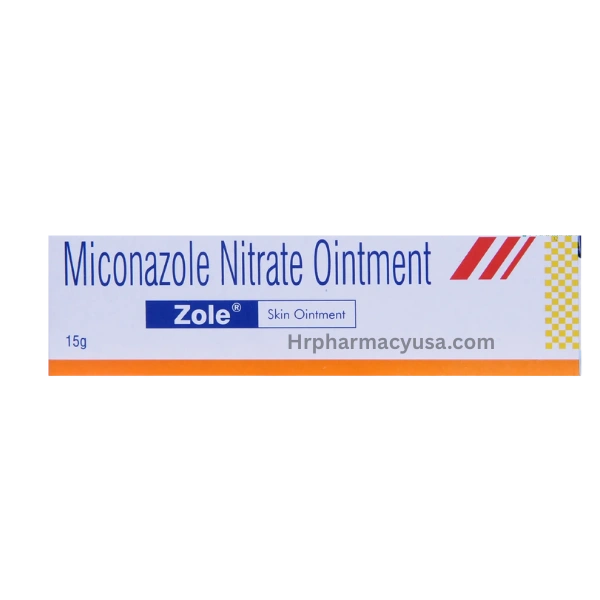
Zole Ointment (Miconazole)
Zole Ointment is a cream that you use on your skin to calm down inflamed, itchy skin and help with common fungal skin illnesses like athlete's foot, jock itch, ringworm, and yeast-related rashes. The "zole" moniker is typically associated with azole antifungals like miconazole or clotrimazole, however the specific chemicals may differ from brand to brand.
| Active Ingredient: | Miconazole |
|---|---|
| Indication: | Fungal skin infections |
| Manufacturer: | Sun Pharmaceutical Industries Ltd |
| Packaging: | 15 gm in 1 tube |
| Strength: | 2% |
| Delivery Time: | 6 To 15 days |
Zole Ointment (Miconazole)
| Variant | Price | Units | Quantity | Add to Cart |
|---|---|---|---|---|
| 3 Ointment/s | $21.00 | $7 /Ointment | ||
| 6 Ointment/s | $30.00 | $5 /Ointment | ||
| 12 Ointment/s | $55.00 | $4.58 /Ointment |
What is Zole Ointment
Zole Ointment is a go-to option for many people dealing with stubborn, itchy rashes that are likely caused by fungus. Think athlete’s foot after sweaty workouts, ringworm you picked up from the gym mat, or a jock itch flare when the weather heats up.
Products with the “zole” name typically belong to the azole antifungal family, which work by targeting fungi at the cell membrane level. That’s a scientific way of saying they help stop fungus from growing and spreading on your skin.
Since “Zole Ointment” can be offered by different manufacturers, the active ingredient may vary. In many countries, it often refers to an azole antifungal such as miconazole or clotrimazole. In the USA, clotrimazole 1 percent and miconazole 2 percent are common strengths for over-the-counter creams and ointments.
Ketoconazole topical at 2 percent exists, too, but in the United States, that strength is often prescription-only in creams. If you’re not sure which version you’re looking at, check the active ingredient on the label to know exactly what you are putting on your skin.
What Zole Ointment is commonly used for
- Athlete’s foot, also known as tinea pedis
- Jock itch, also called tinea cruris
- Ringworm on the body, tinea corporis
- Yeast-related skin rashes in folds or moist areas
- Itchy, red, or scaly patches that suggest a superficial fungal infection
If you have symptoms like circular, expanding rashes; cracking skin between toes; a red, itchy groin; or scaly patches on the trunk or limbs, an antifungal ointment can be a practical first step. If your rash does not improve or gets worse, check with a healthcare professional to rule out other causes like eczema, psoriasis, or bacterial infection.
How Zole Ointment works
Azole antifungals work by blocking a key step fungi need to build their outer membrane. When that membrane is disrupted, the fungus struggles to survive.
This helps stop the infection from spreading across your skin. You usually see improvement within a few days, but the fungus can hang around microscopically even after the skin looks better.
That is why most product directions tell you to keep applying for the full course and sometimes for a week or two after symptoms clear.
How to Apply Miconazole Cream for Yeast Infection
Always follow the directions on your product’s label, since instructions can vary by active ingredient and strength. General tips that often apply to antifungal ointments:
- Patch test: If you have sensitive skin, try a small amount on a tiny area first and wait 24 hours.
- Clean and dry: Wash the area with mild soap, rinse, and pat dry. Fungi love moisture, so starting dry helps.
- Thin layer: Apply a small amount of Zole Ointment in a thin, even layer. You don’t need to glob it on.
- Frequency: Many antifungals are used once or twice daily. Follow the label for how often and for how long.
- Keep going: Continue for the full course, even if your skin looks better after a few days. Stopping early can let the infection come back.
- Hands last: Wash your hands after applying, or use a finger cot or glove if the area is difficult to reach, to prevent spreading the fungus.
- Clothing: Use breathable fabrics and change socks or underwear daily to reduce moisture.
What not to do
- Do not use on broken skin or open wounds unless a clinician tells you to.
- Please keep away from the eyes, inside the nose, mouth, and genitals unless your product label specifically says it is made for those areas.
- Do not use for scalp or nail fungus. Those usually need a different approach.
- Avoid sealing the area with airtight dressings unless directed. Trapped moisture can make fungus happier.
How Long until I See Results
Many people feel less itching within a few days. Visible redness and scaling may take one to two weeks to settle down. Some infections, like athlete’s foot, can need 2 to 4 weeks of steady use.
If your rash is not improving after a whole week of correct use, or if it spreads, check in with a healthcare professional.
Zole Ointment Side Effects
Topical antifungals are generally well tolerated, though mild irritation can happen. You might notice:
- Temporary stinging or burning when first applied
- Dryness, peeling, or redness in the treated area
- Itching that fades as the rash improves.
- Stop using and seek medical advice if you see blistering, severe burning, swelling, hives, or signs of an allergic reaction.
Can I use Zole Ointment with other products
- Moisturizers. You can usually apply a light, fragrance-free moisturizer after the antifungal has absorbed. Use it sparingly.
- Topical steroids. Some people use mild hydrocortisone to calm an itch, but applying a steroid over an untreated fungal rash can mask symptoms without fixing the fungus. Ask a clinician before combining.
- Other antifungals. Using multiple antifungals at once rarely speeds things up and can increase irritation. Pick one and stick to it unless your doctor advises otherwise.
Who should talk to a clinician before use
- Children under 2 years old
- People with diabetes, poor circulation, or weakened immune systems
- Those with large or very inflamed rashes
- Pregnant or breastfeeding individuals
- These groups may still use topical antifungals, but it is best to confirm the plan with a healthcare professional.
Storage and handling
- Store Zole Ointment at room temperature and keep the cap tight
- Avoid heat, sunlight, and humid spots like steamy bathrooms
- Keep away from children and pets
- Do not use past the expiration date
Signs you should seek medical care
- The rash is near the eyes or is on the face and spreading
- You see pus, crusting, or a strong odor
- You tried an antifungal for 1 to 2 weeks with no improvement
- You have a fever or feel unwell, along with the rash
- The skin is very painful or blistered
Common comparisons
If you are deciding among over-the-counter antifungal options in the USA, you may see:
- Clotrimazole 1 percent. Often used twice daily, widely available OTC.
- Miconazole 2 percent. Also, OTC is used for similar fungal rashes.
- Terbinafine 1 percent cream. An allylamine antifungal. Often, it is administered once daily for shorter courses.
- Ketoconazole creams at 2 percent are usually prescription-only in the USA.
- Zole Ointment likely belongs to the azole family based on its name, but always confirm the label. The best choice can depend on the location of your rash, your skin sensitivity, and how consistent you are with daily use.
Helpful habits that support healing
- Keep the area dry. Change out of sweaty clothes fast. Use breathable socks and underwear.
- Rotate shoes. Let them dry out between wears.
- Wash workout gear after each use.
- Do not share towels.
- Disinfect surfaces where feet go, like shower floors or bath mats.
FAQs About Zole Ointment (Miconazole)
| size | 12 Ointment/s, 3 Ointment/s, 6 Ointment/s |
|---|
Please sign in to My Account to leave a review.
Reviews
There are no reviews yet.