
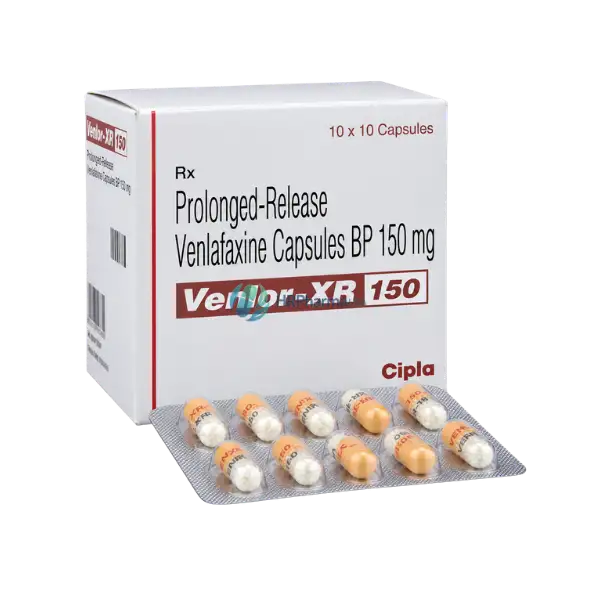
Venlor-XR 150 Mg (Venlafaxine)
Venlor-XR 150 mg contains extended-release venlafaxine, a prescription SNRI antidepressant for adults with depression and certain anxiety disorders. Take only as prescribed, with monitoring and gradual dose changes when needed.
| Active Ingredient (Generic Name) | Venlafaxine |
|---|---|
| Indication | Anxiety disorder and Phobia |
| Manufacturer | Cipla Limited |
| Packaging | 10 capsules in 1 strip |
| Strength | 150mg |
| Delivery Time | 6 To 15 days |
Venlor-XR 150 Mg (Venlafaxine)
| Variant | Price | Units | Quantity | Add to Cart |
|---|---|---|---|---|
| 50 Capsule/s | $15.00 | $0.3 / Capsules | ||
| 100 Capsule/s | $30.00 | $0.3 / Capsules | ||
| 200 Capsule/s | $40.00 | $0.2 / Capsules |
What is Venlor-XR 150 mg
Venlor-XR 150 mg is a prescription antidepressant containing venlafaxine in an extended-release capsule. Each capsule provides the equivalent of 150 mg of venlafaxine. The XR formulation releases the medicine gradually and is generally taken once daily.
It is used for adults with depression and certain anxiety disorders. The Venlor XR patient leaflet describes the branded capsule formulation. Always follow the leaflet supplied with your own pack. You can find related products in our Neurology Drugs.
Venlor-XR 150 mg uses
A clinician may prescribe Venlor-XR for depression, generalized anxiety disorder, or social anxiety disorder. These conditions can affect mood, concentration, sleep, confidence, and everyday activities. Clinicians choose treatment after assessing symptoms, previous medicines, and medical history.
Take Venlor-XR regularly according to your treatment plan. It is not an immediate remedy for occasional stress or a medicine to take only during an anxiety episode. Our Anxiety medicines lists related products; your prescriber should decide which treatment suits you.
How venlafaxine works
Venlafaxine belongs to the serotonin-norepinephrine reuptake inhibitor group. It reduces the reuptake of serotonin and norepinephrine, affecting signaling between nerve cells. These neurotransmitters support mood and other functions.
Its antidepressant action is not fully understood, and treatment response varies. The venlafaxine patient information explains the medicine’s role and how to take it.
How to take Venlor-XR 150 mg
Take the prescribed dose with food, at approximately the same time each day. Extended-release capsules are generally taken once daily, in the morning or evening, as directed by your prescription.
Swallow the capsule whole with water. Do not crush, chew, divide, or dissolve it. Ask your pharmacist for advice if swallowing is difficult. Do not open the capsule unless your pharmacist confirms that the product allows it. Avoid alcohol, and do not drive if you feel dizzy or drowsy.
Dosage and time to benefit
The 150 mg strength is not automatically a suitable starting dose. Your clinician may prescribe a lower strength first and gradually adjust treatment. Kidney or liver problems can require dose changes.
Some improvement may appear within the first few weeks, while fuller benefit can take several weeks longer. NHS antidepressant guidance notes that these medicines can take up to eight weeks to work fully. Keep review appointments and report worsening symptoms rather than increasing the dose yourself. Treatment may continue for months after improvement.
Possible Venlor-XR side effects
Commonly reported effects include nausea, dry mouth, constipation, sweating, headache, dizziness, drowsiness, and difficulty sleeping. Sexual side effects can include reduced desire, erection difficulties, and delayed or absent orgasm or ejaculation.
Some effects settle as treatment continues, while others persist. Sexual symptoms have sometimes continued after antidepressant treatment ends. Discuss troublesome symptoms with your prescriber. Do not assume every symptom is harmless or stop treatment abruptly. The NHS venlafaxine information provides further guidance for patients.
Important mood and safety warnings
Antidepressants can increase suicidal thoughts or behaviors in some people, particularly those aged 24 or younger. All patients need monitoring, especially early in treatment and after dose changes. Contact your prescriber immediately for worsening depression, severe agitation, unusual behavior, or thoughts of self-harm. Seek emergency help if you are in immediate danger.
Get urgent medical care for a seizure, breathing difficulty, facial swelling, severe eye pain with vision changes, or possible serotonin syndrome. Warning signs of serotonin syndrome include fever, confusion, agitation, a rapid heartbeat, and muscle stiffness or twitching.
Blood pressure and medical precautions
Venlafaxine can raise blood pressure. Blood pressure should be checked before treatment and regularly afterward, with existing hypertension controlled before starting.
Tell your clinician about bipolar disorder or mania, seizures, glaucoma, heart rhythm problems, bleeding disorders, low sodium, and kidney or liver disease. These may affect treatment or monitoring. Older adults and people taking diuretics can be more vulnerable to low sodium. Review the venlafaxine prescribing information with your healthcare professional.
Interactions with other medicines
Do not combine venlafaxine with monoamine oxidase inhibitors. A prescriber must manage the required intervals: generally at least 14 days after stopping an MAOI before venlafaxine, and at least seven days after venlafaxine before an MAOI.
Important interactions include other antidepressants, tramadol, tapentadol, triptans, lithium, St. John’s wort, linezolid, and intravenous methylene blue. Aspirin, ibuprofen, and blood thinners can increase bleeding risk. Give your pharmacist a complete list of medicines and supplements before starting anything new.
Pregnancy and breastfeeding
If you are pregnant, planning pregnancy, or breastfeeding, obtain product-specific advice before using Venlor-XR. The South African Venlor XR capsule leaflet lists pregnancy and breastfeeding as contraindications. Restrictions can differ between marketed products.
Venlafaxine passes into breast milk. If pregnancy occurs during an established prescription, contact your prescriber promptly to review treatment safely. Do not abruptly stop or attempt your own taper.
Withdrawal and stopping treatment
Stopping venlafaxine suddenly or reducing it too quickly can cause withdrawal symptoms. These may include dizziness, nausea, disturbed sleep, anxiety, flu-like symptoms, and electric shock-like sensations.
Your clinician should arrange a gradual, individualized reduction when you stop treatment. Some people require a taper lasting months. Report withdrawal symptoms so your clinician can review the plan. Do not skip days or alter capsules to create your own lower dose.
Missed doses and overdose
Take a missed dose when remembered unless the next dose is nearly due. In that case, skip it and resume your usual schedule. Never double the dose.
If you take more than prescribed, obtain urgent medical or poison-center advice immediately, even if you feel well. Overdose can cause serious heart rhythm problems, seizures, or reduced consciousness.
Other strengths and substitutes
Venlor XR capsule strengths include 37.5 mg, 75 mg, and 150 mg. Availability depends on the market and supplied product.
Effexor XR and generic venlafaxine extended-release capsules also contain venlafaxine. A pharmacist must confirm the appropriate strength, formulation, and prescription before a switch. Immediate-release venlafaxine and other antidepressants are not automatic substitutes.
Storage and product questions
Keep capsules in their original packaging, away from moisture and children. Follow the temperature printed on your pack and check its expiry date.
For pack details and availability, contact HRPharmacyUSA. You can also read our Medicine Policy and Regulated Medicines information. For questions about dose changes, side effects, or stopping treatment, contact your prescriber.
FAQs
1. What is Venlor-XR 150 mg used for
2. Is Venlor-XR 150 mg a sleeping pill
3. Should I take Venlor-XR in the morning or at night
4. Can I stop Venlor-XR when I feel better
5. Can another venlafaxine 150 mg product replace Venlor-XR
| size | 100 Capsule/s, 200 Capsule/s, 50 Capsule/s |
|---|
Please sign in to My Account to leave a review.
Reviews
There are no reviews yet.