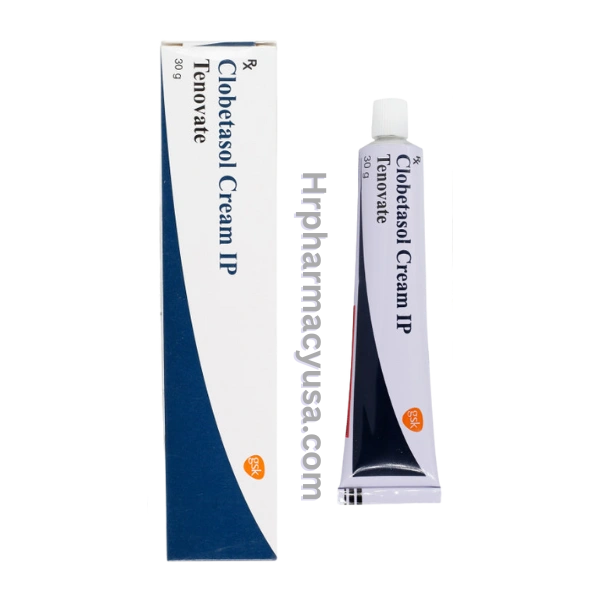
Tenovate Cream (Clobetasol Propionate) is a high‑strength topical steroid that doctors often reserve for tougher skin flare-ups, the kind that stay red, itchy, thick, or scaly even after you have tried gentler options.
Clobetasol propionate is considered a super‑potent corticosteroid, which means it can work well, but it also needs careful use.
This is not a daily “maintenance” moisturizer. It is usually part of a short, targeted plan to quickly calm inflammation.
What Tenovate Cream is commonly used for
Providers may prescribe clobetasol cream for inflammatory skin conditions that respond to corticosteroids, such as:
- Eczema (atopic dermatitis) flare-ups
- Contact dermatitis from irritants or allergens.
- Psoriasis (especially thicker plaques on elbows, knees, or hands)
- Other steroid-responsive rashes where inflammation and itching are the main issues
People often search for terms like “strong steroid cream for eczema,” “clobetasol cream for psoriasis,” “itchy rash steroid cream,” or “cream for thick scaly patches.” Tenovate fits into that category, but it should be used exactly as directed because more is not better with high‑potency steroids.
How it works
Inflamed skin tends to overreact, leading to redness, swelling, itching, and, in some cases, thicker skin from repeated scratching or chronic irritation.
Clobetasol helps by calming the local immune and inflammatory response in the skin. As the inflammation settles, itching and redness usually improve, and thickened areas can soften.
How to apply it
In many treatment plans, the goal is a thin, even layer on the affected area, not a heavy coating.
- Wash and dry your hands, then apply a small amount to the affected skin only.
- Rub in gently until it disappears.
- Wash your hands afterward (unless your hands are the treated area).
- Avoid using it more often or longer than prescribed.
Do not apply to broken skin unless your prescriber specifically instructed you to do so. Using it on open cuts can raise irritation and may increase absorption.
Where you should be careful
High‑potency steroid creams are not appropriate for every body area.
- The face, groin, and underarms are more likely to develop side effects, such as thinning skin. Use it only if a clinician explicitly directs it.
- Avoid getting it in the eyes, mouth, or nose.
- Do not cover the treated area with airtight bandages or wraps unless told to do so. Occlusion can significantly increase absorption.
If your rash could be an infection (for example, fungal “ringworm,”
impetigo, or herpes), a steroid can sometimes make it look temporarily better while the infection spreads. If the area is weeping, crusting, painful, rapidly expanding, or if you have a fever, it is worth getting checked rather than guessing.
Possible side effects of Tenovate Cream
Many people tolerate short courses well, but side effects are possible, especially with stronger steroids or longer use:
- Burning, stinging, dryness, or irritation at the application site
- Skin thinning, easy bruising, stretch marks, or visible tiny blood vessels
- Changes in skin color in the treated area
- Acne-like bumps or worsening of rosacea around the face in sensitive users
With extensive use, prolonged use, or use under occlusion, topical steroids can be absorbed enough to cause more serious effects (including hormonal suppression).
This risk is higher in children because of their skin surface area relative to body size. If your prescriber is treating a child, follow the plan closely and ask about duration and safe areas.
Storage and practical tips
Store at room temperature and keep the cap closed. Do not share prescription steroid creams. If symptoms are not improving within the timeframe your prescriber gave, or they keep coming right back, it may be a sign that you need a different diagnosis or a step‑down plan.
Available strengths
Tenovate Cream is commonly seen as clobetasol propionate 0.05% (super‑potent). Other clobetasol options available in the market may vary by manufacturer and formulation, such as:
Always confirm the exact strength and formulation on the label, since potency and “feel” can differ between a cream, ointment, solution, or foam.
Often, yes, but timing matters. Many clinicians suggest applying the medicated cream first to clean, dry skin, then moisturizing later. Ask your prescriber for the schedule that fits your condition.
Apply it when you remember, unless it is close to the next scheduled application. Do not double up just to “catch up.”
Generics have the same active ingredient and strength, but the base (vehicle) can differ. Some people notice one spreads or absorbs differently, which can affect comfort.
Sometimes, but order and timing can matter, and mixing can irritate skin. Use combinations only when a clinician has recommended them for your specific diagnosis.
It can reduce visible inflammation and may affect results if used on the test area. Tell your clinician about any topical steroids you are using before testing.

Reviews
There are no reviews yet.