
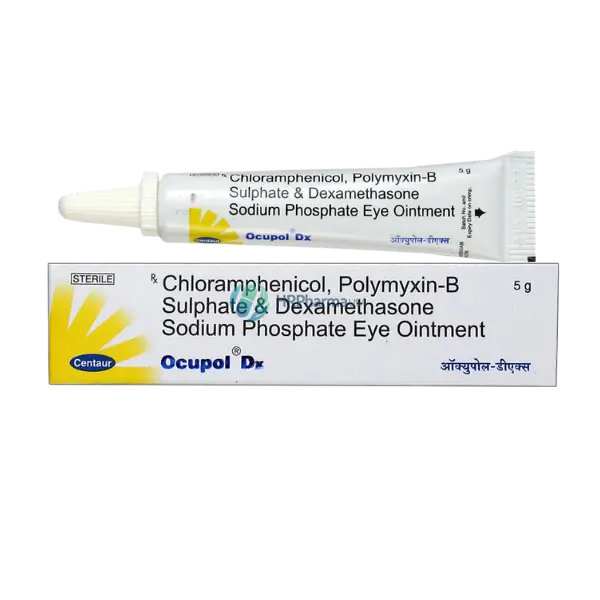
Ocupol-DX Eye Ointment 5 gm
Ocupol-DX Eye Ointment 5 gm combines two antibiotics and dexamethasone to treat selected eye infections with inflammation. Use it as prescribed, apply it carefully, and follow up with your eye doctor.
| Active Ingredient: | Chloramphenicol, Dexamethasone and Polymyxin B |
|---|---|
| Indication: | Bacterial Eye Infections with Inflammation |
| Manufacturer: | Centaur Pharmaceuticals Pvt. Ltd. |
| Packaging: | 5 gm in 1 Tube |
| Strength: | Chloramphenicol 10 mg/g, Dexamethasone 1 mg/g, Polymyxin B 10,000 IU/g |
| Delivery Time: | 6 To 15 days |
Ocupol-DX Eye Ointment 5 gm
| Variant | Price | Units | Quantity | Add to Cart |
|---|---|---|---|---|
| 1 Tube | $13.00 | $13 / Tube | ||
| 3 Tube/s | $36.00 | $12 / Tube | ||
| 6 Tube/s | $66.00 | $11 / Tube |
Ocupol-DX Eye Ointment 5 gm: Uses, Application, Side Effects and Guide
Ocupol-DX Eye Ointment 5 g is a prescription eye medicine containing chloramphenicol, polymyxin B sulfate, and dexamethasone. The two antibiotics treat susceptible bacteria, while dexamethasone reduces inflammation.
An eye doctor may prescribe this combination when both infection and inflammation need treatment. Because it contains a steroid, use it after an eye assessment rather than for redness alone.
What Is Ocupol-DX Eye Ointment 5 g?
Ocupol-DX is an ophthalmic ointment, meaning it is made for application to the eye. It comes in a 5 g tube and is marketed by Centaur Pharmaceuticals.
The ointment combines antibacterial treatment with a corticosteroid. This can help with certain eye conditions, but the diagnosis matters. Similar symptoms can come from an infection, allergy, dryness or an injury. The right eye care treatment depends on the underlying problem.
Ointment can briefly leave a film over the eye and blur vision after application. Wait until your sight is clear before driving, using machinery or doing anything that requires sharp vision.
Active Ingredients and Strength
The manufacturer’s product information lists the following amounts in each gram of ointment:
| Active ingredient | Amount per gram | Main role |
|---|---|---|
| Chloramphenicol | 10 mg, equivalent to 1% | An antibiotic that slows the growth of susceptible bacteria. |
| Polymyxin B sulfate | 10,000 IU | An antibiotic that acts against certain bacteria. |
| Dexamethasone | 1 mg, equivalent to 0.1% | A steroid that reduces inflammation. |
The 5 g on the pack describes the amount of ointment in the tube. It is not the strength of an individual ingredient.
What Is Ocupol-DX Eye Ointment Used For?
A doctor may prescribe Ocupol-DX for selected bacterial infections affecting the eye’s surface when inflammation also needs treatment. It may also be used for a steroid-responsive eye condition when there is a bacterial infection or a significant risk of one.
Treatment may help reduce infection-related discharge, redness, swelling, and discomfort when the bacteria are susceptible to its antibiotics. These symptoms alone cannot confirm a bacterial infection.
Not every case of pink eye needs antibiotics, and a steroid combination is not the routine choice for every bacterial case. The CDC’s guidance on pink eye treatment explains why the cause determines the treatment. Antibiotics do not treat viral conjunctivitis, and steroid eye medicines can worsen certain infections.
How Does Ocupol-DX Work?
Chloramphenicol interferes with the proteins that bacteria need to grow. Polymyxin B damages the outer membrane of susceptible bacteria. Their actions help control the bacterial part of the condition.
Dexamethasone reduces the eye’s inflammatory response. This may ease redness and swelling, but reduced redness does not mean the infection has cleared. Keep to the treatment plan and attend any scheduled review.
An antibiotic and steroid combination serves a different purpose than a standard lubricating eye ointment. Do not use it repeatedly whenever your eyes feel irritated.
Benefits of Ocupol-DX Eye Ointment
- Controlling susceptible bacteria on the eye’s surface.
- Reducing inflammation that contributes to redness and swelling.
- Easing pain as the condition improves.
- Providing the prescribed medicines in an ointment formulation.
How to Apply Ocupol-DX Eye Ointment
Use the amount and frequency written on your prescription. The manufacturer leaves the dosing schedule to the physician, so no single schedule suits every patient.
To apply an eye ointment:
- Wash and dry your hands.
- Tilt your head back or lie down.
- Gently pull the lower eyelid down to create a small pocket.
- Place the prescribed amount of ointment inside that pocket.
- Keep the tube tip away from your eye, eyelids, eyelashes and fingers.
- Close the eye gently, then replace the cap.
The NHS explains the basic technique for applying chloramphenicol eye ointment. Follow your own prescription for the amount, frequency and duration because Ocupol-DX also contains a steroid and another antibiotic.
Avoid rubbing the eye after application. If the tube tip touches a surface or looks contaminated, ask a pharmacist whether you should replace the tube.
What to Expect During Treatment
Improvement depends on the diagnosis. Your doctor should explain when to expect a response and when the eye needs another examination.
Contact the prescriber if you don’t see clear improvement within 24 to 48 hours, or sooner if symptoms worsen. Do not increase the amount or keep using the ointment longer simply because the eye remains red.
Severe pain, sensitivity to light, increasing redness or a lasting change in vision needs prompt eye care. Brief blurring immediately after applying the ointment is different from vision that stays blurred or worsens.
Possible Side Effects
- Stinging or burning.
- Mild irritation.
- Temporary blurred vision.
- Itching or redness.
Persistent discomfort, worsening swelling, or a rash may indicate irritation or an allergic reaction. Stop using the product and get medical advice if you suspect an allergy. Trouble breathing or swelling of the face, lips or throat requires emergency help.
Chloramphenicol has rarely been associated with serious blood problems. Report unusual bruising, repeated infections, or marked tiredness promptly. The NHS information on chloramphenicol side effects explains these uncommon warning signs.
Steroid Precautions and Eye Pressure
Dexamethasone can raise eye pressure, particularly with prolonged or repeated use. Some people are more sensitive to this effect, including those with glaucoma or a previous pressure increase during steroid treatment.
The American Academy of Ophthalmology’s EyeWiki explains steroid-related increases in eye pressure. An eye doctor may need to measure your pressure if you continue treatment.
Longer steroid use can also increase cataract risk, delay healing or allow an infection to worsen. These risks are why treatment duration and follow-up matter. Do not restart a leftover tube for a new eye problem without an examination.
Who Should Avoid Ocupol-DX?
Do not use the ointment if you are allergic to chloramphenicol, polymyxin B, dexamethasone or another ingredient in the product.
Do not use it for fungal eye infections, epithelial herpes simplex keratitis, or certain other viral eye infections. Tell your doctor about previous herpes eye disease, glaucoma, corneal damage and any personal or family history of blood or bone marrow disorders.
The manufacturer does not recommend this product during pregnancy or breastfeeding. Ask your clinician about another treatment if either applies to you.
Children need an individual assessment. The product information does not establish its safety and effectiveness in children, so do not reuse an adult’s prescription for a child.
Other Eye Medicines and Interactions
Tell your eye doctor about all medicines you use, including glaucoma drops, other antibiotics, steroid drops, and oral medicines. Note previous reactions to eye medicines as well.
Adding products without advice can duplicate treatment or make it harder to tell what is irritating. If you already use prescription eye drops, ask whether to continue them during this course.
Available Formulations and Pack Sizes
The manufacturer lists both an ointment and eye drops:
| Formulation | Pack size | Listed concentration |
|---|---|---|
| Ocupol-DX Eye Ointment | 5 g tube | Chloramphenicol 10 mg/g, polymyxin B sulfate 10,000 IU/g and dexamethasone 1 mg/g. |
| Ocupol-DX Eye Drops | 5 mL bottle | Chloramphenicol 4 mg/mL, polymyxin B sulfate 5,000 IU/mL and dexamethasone 1 mg/mL. |
The drops have different antibiotic concentrations. Do not exchange them for the ointment without instructions.
A separate higher-strength Ocupol-DX ointment could not be verified. Check the label rather than treating a different tube size or dosage form as an equivalent dose.
Ocupol-DX Substitutes and Treatment Alternatives
An alternative depends on whether you need an antibiotic alone or an antibiotic combined with a steroid. These products have different formulas and require a prescribing decision.
| Alternative | Active ingredients | Main difference |
|---|---|---|
| Maxitrol ophthalmic ointment | Neomycin 3.5 mg/g, polymyxin B sulfate 10,000 units/g and dexamethasone 0.1% | Contains neomycin instead of chloramphenicol. |
| Tobradex ophthalmic ointment | Tobramycin 0.3% and dexamethasone 0.1% | Uses a different antibiotic with a steroid. |
| Erythromycin ophthalmic ointment | Erythromycin 0.5% | An antibiotic-only option for selected bacterial infections. |
| Ciplox Eye Drops | Ciprofloxacin | An antibiotic in drop form without dexamethasone. |
Eye Infection or Dry Eyes?
Burning and a gritty feeling can also come from dry eyes. Lubricants such as hydroxypropylmethylcellulose gel or Trehalube Eye Drops have a different role: they support moisture on the eye’s surface.
They do not replace prescribed antibiotics for a bacterial infection. If dryness is the main problem, an antibiotic and steroid ointment may be unnecessary. An eye assessment helps avoid treating the wrong cause.
FAQs
Can I wear contact lenses during treatment?
Can I use eye drops and Ocupol-DX ointment together?
What should I do if I miss an application?
Can another person use my tube for similar symptoms?
How should I store the ointment after opening?
| size | 1 Tube, 3 Tube/s, 6 Tube/s |
|---|
Please sign in to My Account to leave a review.
Reviews
There are no reviews yet.