
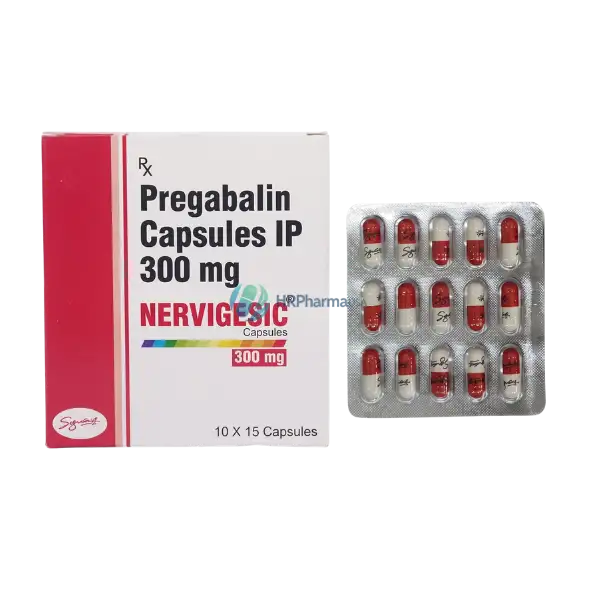
Nervigesic 300 mg Pregabalin Capsules
Nervigesic 300 mg Pregabalin Capsules are a prescription medicine used for nerve pain, fibromyalgia pain, and as an add-on for seizure control. A higher-strength option, typically used after a clinician adjusts the dose.
| Product Detail | Information |
|---|---|
| Active Ingredient | Pregabalin |
| Indication | Neuropathic Pain |
| Manufacturer | Signature Phytochemical Industries |
| Packaging | 15 Capsules in 1 Strip |
| Strength | 300mg |
| Delivery Time | 6 To 15 days |
Nervigesic 300 mg Pregabalin Capsules
| Variant | Price | Units | Quantity | Add to Cart |
|---|---|---|---|---|
| 45 Capsule/s | $49.53 | $0.99 /Capsules | ||
| 90 Capsule/s | $83.01 | $0.93 /Capsules | ||
| 180 Capsule/s | $147.68 | $0.83 /Capsules | ||
| 300 Capsule/s | $217.17 | $0.72 / Capsules |
Nervigesic 300 mg Pregabalin Capsules
Nervigesic 300 mg Pregabalin Capsules are used when nerve-related pain or certain seizure disorders need more consistent control than basic pain medicines can offer. If you have ever dealt with burning, shooting, tingling, or electric-like pain from nerve damage, you already know how different it feels from a regular muscle ache or joint pain. Pregabalin is designed for that nerve-type signal problem, not for everyday soreness.
Pregabalin is a prescription medicine. In the U.S., pregabalin is considered a controlled substance (Schedule V), which means it can help many people, but it also needs responsible use and proper medical oversight.
What pregabalin does (and what it does not do)
- It is not an anti-inflammatory like ibuprofen.
- It is not an antibiotic.
- It is not a cure for the underlying cause of neuropathy (like diabetes), but it may help manage symptoms.
Common uses of pregabalin
- Nerve pain from diabetes (diabetic peripheral neuropathy)
- Postherpetic neuralgia (nerve pain after shingles)
- Fibromyalgia pain
- Neuropathic pain related to spinal cord injury
- Add-on therapy for partial-onset seizures (used with other seizure medicines)
Who may benefit most?
- Symptoms are still limiting sleep, work, or mobility
- Lower doses are tolerated but not effective enough
- A clinician is aiming for a target daily dose based on your condition and kidney function
How to take it
Take pregabalin exactly as prescribed. It is commonly taken two or three times daily, depending on the condition and the plan your prescriber chooses. You can take it with or without food.
A few points that matter in day-to-day life:
- Try to take it at the same times each day. Consistency helps steady symptom control.
- If it makes you sleepy or dizzy, your prescriber may adjust timing (for example, shifting more of the dose toward evening).
- Do not change the dose on your own. Going up too quickly can increase side effects, and stopping suddenly can cause withdrawal symptoms.
If you miss a dose
How fast it starts working
Side effects you should know about
- Dizziness
- Sleepiness or feeling “foggy”
- Blurry vision
- Dry mouth
- Swelling in hands, legs, or feet
- Weight gain or increased appetite
- Constipation
- Trouble with coordination or balance
- Swelling of the face, lips, tongue, or throat (possible angioedema)
- Trouble breathing, severe sedation, or slowed breathing (risk increases if combined with opioids, benzodiazepines, or alcohol)
- New or worsening depression, mood changes, or suicidal thoughts
- Severe rash or signs of allergic reaction
Key warnings and precautions
Kidney function matters. The kidneys clear pregabalin mainly. People with reduced kidney function usually need a lower dose or a different dosing schedule. If your dose seems “high,” it may be because kidney function was considered, or it may be worth double-checking.
Driving and work safety. Until you know how it affects you, be cautious with driving, ladders, machinery, or any work where slowed reaction time could be dangerous.
Stopping the medication. Do not stop pregabalin suddenly unless you are told to. Stopping abruptly can lead to withdrawal symptoms (sleep problems, nausea, headache, anxiety, sweating) and may worsen seizures in people taking it for seizure control. Tapering is commonly recommended.
Misuse and dependence risk. Pregabalin can be misused by some people, especially at higher doses or in combination with other sedatives. Take only the amount prescribed and store it securely.
Interactions (what to avoid or discuss first)
- Opioid pain medicines (increased risk of sedation, constipation, and slowed breathing)
- Benzodiazepines and other sleep or anxiety medicines (additive sedation)
- Alcohol (can significantly worsen dizziness, impaired judgment, and breathing risk)
- Other medicines that cause drowsiness (some antihistamines, muscle relaxants)
Available strengths
- 75 mg
- 150 mg
- 300 mg
Substitutes and market alternatives (talk with a clinician before switching)
- Lyrica (brand-name pregabalin)
- Generic pregabalin capsules (various manufacturers)
- Gabapentin (related medicine, different dosing and absorption)
- Certain antidepressants used for nerve pain (for example, duloxetine or amitriptyline)
- Topical options for localized nerve pain (like lidocaine patches)
Storage and handling
FAQs
1. Can I open Nervigesic 300 mg Pregabalin Capsules and mix the powder with food?
2. Will pregabalin show up on a drug test?
3. Can I travel with pregabalin?
4. What should I tell a surgeon or dentist before a procedure?
5. Is pregabalin safe for older adults?
| size | 180 Capsule/s, 300 Capsule/s, 45 Capsule/s, 90 Capsule/s |
|---|
Please sign in to My Account to leave a review.



Reviews
There are no reviews yet.