
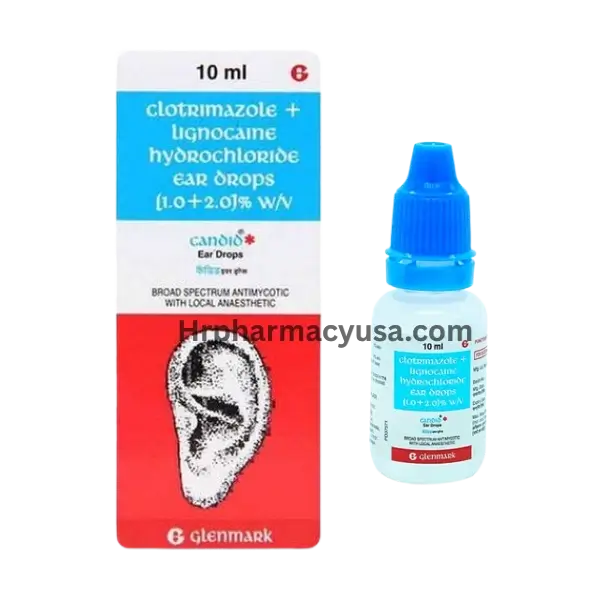
Candid Ear Drop (Clotrimazole/Lignocaine)
| Active Ingredient: | Clotrimazole, Lignocaine |
|---|---|
| Indication: | Fungal Infections in the Ear |
| Manufacturer: | Glenmark Pharmaceuticals Ltd. |
| Packaging: | 10ml in bottle |
| Strength: | 10ml |
| Delivery Time: | 6 To 15 days |
Candid Ear Drop (Clotrimazole/Lignocaine)
| Variant | Price | Units | Quantity | Add to Cart |
|---|---|---|---|---|
| 1 Bottle | $10.00 | $10 / Bottle | ||
| 3 Bottle/s | $20.00 | $6.67 / Bottle | ||
| 6 Bottle/s | $35.00 | $5.83 / Bottle | ||
| 12 Bottle/s | $58.00 | $4.83 / Bottle |
About Candid Ear Drop (Clotrimazole/Lignocaine)
Candid Ear Drop (Clotrimazole/Lignocaine) is a combination ear drop used when a clinician suspects a fungal infection in the ear canal and you also need relief from irritation.
Fungal ear infections can feel miserable, usually with persistent itching, a blocked or “full” feeling, flaky debris, and sometimes discomfort that keeps coming back.
This product pairs an antifungal medicine (clotrimazole) with a local anesthetic (lignocaine, also spelled lidocaine on some labels) to address both the cause and the symptoms.
What it’s used for
Candid Ear Drop is mainly used for otomycosis, which is a fungal infection of the outer ear canal (a type of otitis externa). It may be considered when symptoms and exam findings suggest fungus rather than bacteria.
Fungal infections are more likely after frequent moisture in the ear (humidity, sweating, or swimming); after recent antibiotic ear drops; or when the ear canal skin is already irritated.
If your ear problem started with severe pain, fever, thick pus-like drainage, or a big drop in hearing, it is worth getting checked promptly because bacterial infection, a middle-ear issue, or an eardrum problem may need a different approach.
How it works (in plain terms)
- Clotrimazole damages the fungal cell membrane, which helps stop fungal growth and clears the infection over time.
- Lignocaine numbs the surface of the ear canal, which can reduce burning, itching-triggered soreness, and discomfort after the drops go in.
The numbing effect is symptom relief. The antifungal is what actually treats the infection.
How to use it
Always follow the directions on your prescription or label. If you were not given clear instructions, ask before starting. Typical use of ear drops often looks like a few drops into the affected ear for several days, but the exact dose and duration can vary based on how the ear looks on exam.
Common practical tips that help:
- Wash your hands before and after.
- Warm the bottle in your hands for a minute so the drops feel less startling.
- Lie on your side with the affected ear facing up.
- Pull the ear gently (up and back for adults) to help the drops reach the canal.
- Stay in that position for a few minutes to let the medication coat the canal.
- Keep the ear as dry as you can during treatment. Moisture makes fungal problems harder to clear.
- Avoid cotton swabs. They often push debris deeper and irritate the skin.
- What you may notice
A mild sting for a moment can happen in some people. With the lignocaine component, the ear may feel temporarily numb or “different.” If the fungus is the real cause, itching and irritation often start settling as treatment continues, though it may not feel better instantly.
Side Effects of Candid Ear Drop
Many people tolerate these drops well. Still, side effects are possible:
- Mild burning or stinging
- Temporary numbness
- Local irritation or redness
- Unusual increase in pain or itching (can happen with sensitivity to an ingredient)
Stop using it and seek medical advice quickly if you develop rash, hives, marked swelling, severe pain, dizziness, or any sudden change in hearing.
Important safety notes
Do not use any ear drops blindly if you might have a perforated eardrum (a hole/tear), ear tubes, recent ear surgery, or significant bloody drainage unless a clinician specifically told you it is safe. In those situations, the right treatment depends on what is happening behind the eardrum.
Available strength
Candid ear drops are commonly found as
- Clotrimazole 1% w/v + Lignocaine (Lidocaine) 2% w/v ear drops
Pack sizes vary by seller and manufacturer. 10 mL is common, and you may also see 5 mL packs.
Substitutes and alternatives already on the market
Your clinician may choose an alternative based on the cause (fungal vs. bacterial), the condition of the eardrum, and your symptom severity. Market alternatives may include:
- Clotrimazole 1% solution (single-ingredient clotrimazole; sometimes used when numbing is not needed)
- Other antifungal ear drop options depending on availability (brand and formulation vary)
- If the problem is bacterial instead of fungal, clinicians often use antibiotic ear drops (sometimes combined with a steroid). These are not true substitutes for fungal infections, but they are common alternatives when the diagnosis is different.
Because ear infections can look similar at home, it is best not to swap treatments without confirming the cause.
FAQs
| size | 1 Bottle, 12 Bottle/s, 3 Bottle/s, 6 Bottle/s |
|---|
Please sign in to My Account to leave a review.

Reviews
There are no reviews yet.