
What Is Sildenafil?
Sildenafil citrate is a PDE5 inhibitor approved by the FDA to treat erectile dysfunction (ED) and pulmonary arterial hypertension. It works by relaxing smooth muscle in blood vessel walls, increasing blood flow to the penis during sexual stimulation. generic sildenafil tablets delivers the same active compound as brand-name Viagra at a significantly lower cost.
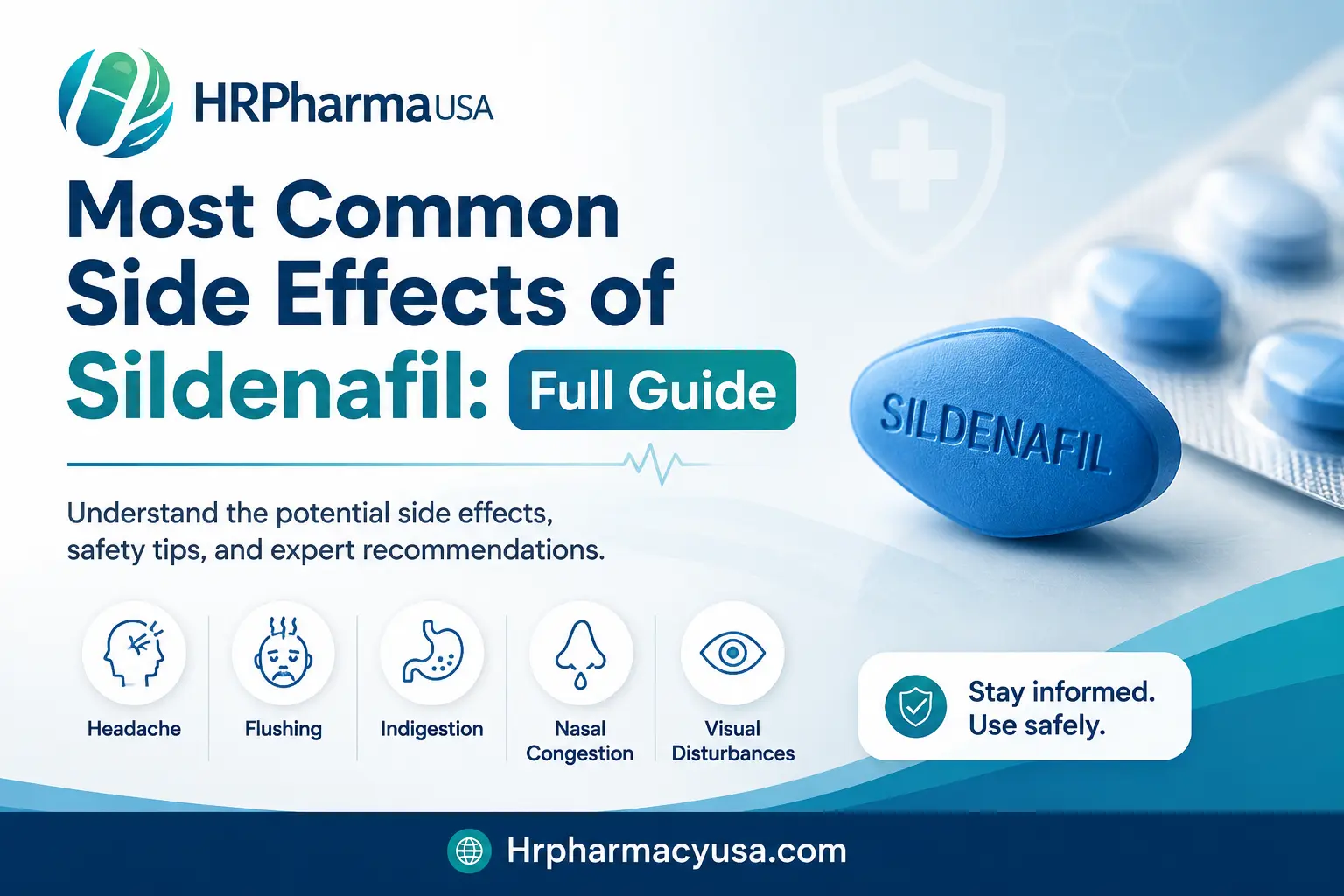
Most Common Side Effects of Sildenafil
FDA-reviewed clinical trials in men taking sildenafil (cenforce 100 mg) for ED produced a clear frequency table. These numbers come directly from placebo-controlled studies in the FDA label:
| Adverse Reaction | Sildenafil | Placebo |
|---|---|---|
| Headache | 16% | 4% |
| Flushing | 10% | 1% |
| Dyspepsia | 7% | 2% |
| Nasal Congestion | 4% | 2% |
| Abnormal Vision | 3% | 0% |
| Dizziness | 2% | 1% |
| Rash | 2% | 1% |
All sildenafil citrate side effects listed above occurred at a rate of at least 2% and were meaningfully higher than placebo. Most are mild, transient, and linked to the drug’s vasodilatory mechanism.
Headache
Sildenafil headache is the most frequently reported side effect, occurring in 1 in 6 users in clinical trials. The cause is vasodilation – the same blood-vessel relaxation that produces the drug’s therapeutic effect also affects cranial vessels.
- Typically mild to moderate in intensity
- Onset within 30–60 minutes of dosing
- Resolves within 2–4 hours in most cases
- Over-the-counter analgesics (acetaminophen, ibuprofen) can help; confirm with your prescriber
Lowering the dose from 100 mg to 50 mg or 25 mg often reduces sildenafil headache frequency significantly.
Flushing
Sildenafil flushing affects roughly 1 in 10 users and presents as warmth, redness, or tingling in the face, neck, or chest. Like headache, it is a direct consequence of vasodilation and is not an allergic reaction.
- Usually begins within 20–60 minutes of dosing
- Mild and self-limiting in the vast majority of cases
- Avoiding alcohol reduces flushing severity
- Staying in a cool environment can ease discomfort
Sildenafil flushing that is severe, spreads widely, or is accompanied by breathing difficulty warrants medical evaluation.
Nasal Congestion
Nasal congestion occurs in 4% of sildenafil users versus 2% on placebo. Blood vessel dilation in nasal mucosa causes the stuffiness. It is temporary and typically resolves as the drug clears. Saline nasal spray can provide comfort without drug interactions.
Indigestion (Dyspepsia)
Dyspepsia affects 7% of users – the third most common sildenafil side effect. Symptoms include heartburn, stomach discomfort, and acid reflux. Taking sildenafil on an empty stomach reduces both dyspepsia risk and absorption delay caused by high-fat meals.
- Avoid large, fatty meals before dosing
- Antacids may help mild symptoms; check for interactions first
- Persistent or severe stomach pain should be reported to a prescriber
Visual Changes
Abnormal vision occurs in 3% of users and is absent in placebo groups. The most commonly reported visual changes include:
- Mild, temporary blurring
- Altered color perception (blue-green tinge)
- Increased light sensitivity
These effects are dose-dependent and typically short-lived. Any sudden, painless loss of vision requires immediate emergency care – this is a potential sign of NAION (see below).
Dizziness
Dizziness occurs in 2% of sildenafil users and results from the drug’s blood-pressure-lowering effect. It is more pronounced when standing quickly (orthostatic hypotension). Men taking antihypertensive medications face a higher risk. Sitting or lying down when dizziness occurs reduces fall risk.
Serious Side Effects – When to Seek Emergency Care
These events are rare but potentially permanent or life-threatening. Call 911 or go to an emergency room immediately if any of the following occur:
- Priapism – a painful erection lasting more than 4 hours. Permanent erectile tissue damage can result if untreated. Do not wait to see if it resolves on its own.
- Sudden vision loss (NAION) – Non-arteritic anterior ischemic optic neuropathy causes abrupt, painless loss of vision in one or both eyes. Risk factors include pre-existing optic nerve conditions, diabetes, and hypertension.
- Sudden hearing loss – Abrupt decrease or loss of hearing, sometimes with ringing (tinnitus) or dizziness. Stop sildenafil and seek care immediately.
- Severe allergic reaction / Stevens-Johnson syndrome – Signs include widespread rash, blistering or peeling skin, hives, swelling of the face or throat, and difficulty breathing or swallowing. Stevens-Johnson syndrome is a medical emergency.
- Cardiac events – Chest pain, shortness of breath that worsens, fainting, or irregular heartbeat during or after sexual activity. Sexual activity itself increases cardiac demand; sildenafil’s blood-pressure-lowering effect adds additional risk in vulnerable patients.
- Severe hypotension – Dangerous blood pressure drops, particularly when sildenafil is combined with nitrates, alpha-blockers, or alcohol.
Who Should Not Take Sildenafil
Certain conditions and drug combinations make sildenafil unsafe. Review these contraindications before use.
Absolute contraindications – do not use sildenafil if you:
- Take any nitrate medication (nitroglycerin, isosorbide dinitrate, isosorbide mononitrate, amyl nitrite/poppers). The combination causes severe, potentially fatal hypotension.
- Take riociguat (Adempas), a guanylate cyclase stimulator used for pulmonary hypertension.
- Have a known hypersensitivity to sildenafil or any component of the tablet.
Use with caution or avoid – discuss with your prescriber if you have:
- A heart attack, stroke, or life-threatening arrhythmia within the past 6 months
- Unstable angina or significant heart failure
- Resting hypotension (blood pressure below 90/50 mmHg) or severe uncontrolled hypertension (above 170/110 mmHg)
- Retinitis pigmentosa – a genetic eye condition that may increase risk of vision-related side effects
- A prior episode of NAION (vision loss from optic nerve ischemia)
- Severe hepatic impairment or end-stage renal disease requiring dialysis
How to Reduce Side Effects
Practical steps to minimize sildenafil citrate side effects without reducing effectiveness:
- Take on an empty stomach. High-fat meals delay absorption by up to 60 minutes and can intensify dyspepsia. A light meal is acceptable.
- Stay hydrated. Adequate water intake supports blood pressure stability and may reduce headache severity.
- Start with the lowest effective dose. The 25 mg dose is appropriate for men who are sensitive to side effects or taking interacting medications. Titrate up only if needed.
- Avoid alcohol. Alcohol amplifies vasodilation, worsening flushing, dizziness, and blood pressure drops. Limit to one standard drink or less.
- Do not exceed your prescribed dose. Higher doses increase side effect frequency without proportionally improving efficacy. The maximum approved dose for ED is 100 mg per day.
- Time your dose correctly. Take sildenafil 30–60 minutes before sexual activity. Taking it too early or too late reduces effectiveness and may prompt unnecessary re-dosing.
- Report persistent or worsening symptoms. If headache, flushing, or dyspepsia are severe or do not resolve within a few hours, contact your prescriber. A dose adjustment or alternative PDE5 inhibitor may be appropriate.
How Long Do Sildenafil Side Effects Last?
Understanding how long sildenafil lasts helps set accurate expectations for both its benefits and its side effects.
Sildenafil has a half-life of approximately 3–5 hours. This means blood levels fall by half every 3–5 hours, and most of the drug clears within 12–24 hours.
Side effect duration by type:
| Side Effect | Typical Duration |
|---|---|
| Headache | 2–4 hours |
| Flushing | 1–3 hours |
| Nasal congestion | 2–4 hours |
| Dyspepsia | 1–3 hours |
| Visual changes | 2–4 hours |
| Dizziness | 1–3 hours |
| Muscle aches / back pain | Up to 12–24 hours |
Most common side effects resolve within 2–4 hours as the drug clears the system. Visual changes and dizziness may persist slightly longer at higher doses. Muscle aches or back pain, though less common, can last up to 24 hours.
If any side effect lasts beyond 24 hours or worsens over time, contact a healthcare provider. Serious effects – priapism, vision loss, hearing loss – require emergency care regardless of timing.
FAQs
Are sildenafil side effects common?
Yes. In FDA clinical trials, more than 1 in 6 men (16%) reported headache and 1 in 10 (10%) reported flushing. At least one side effect is experienced by a meaningful proportion of users, though most are mild and short-lived. Serious side effects are rare.
Can I take sildenafil every day?
Sildenafil is FDA-approved for daily use in pulmonary arterial hypertension (as Revatio, 20 mg three times daily). For ED, it is typically taken on demand rather than daily. Some prescribers do recommend low-dose daily sildenafil for ED in specific patients. Follow your prescriber’s instructions; do not self-adjust to daily dosing without guidance.
What’s the difference between sildenafil and Viagra?
Sildenafil is the active ingredient in Viagra. Generic sildenafil contains the identical compound at the same approved doses (25 mg, 50 mg, 100 mg). The only differences are inactive fillers, manufacturer, and price. Generic sildenafil is significantly less expensive and produces the same clinical outcomes.
Does sildenafil cause permanent side effects?
The vast majority of sildenafil side effects are temporary and resolve as the drug clears. However, priapism left untreated can cause permanent erectile tissue damage, and NAION can result in permanent vision loss. These outcomes are rare but underscore the importance of seeking emergency care promptly when serious symptoms appear.
What should I do if I get a headache from sildenafil?
A sildenafil headache is typically mild and resolves within 2–4 hours. Practical steps: stay hydrated, rest in a quiet and cool environment, and take an OTC analgesic such as acetaminophen or ibuprofen if your prescriber has not advised against it. If headaches are severe or occur consistently, ask your prescriber about reducing your dose to 50 mg or 25 mg.
Useful Sources
- FDA DailyMed – Sildenafil Prescribing Information: dailymed.nlm.nih.gov/dailymed/fda/fdaDrugXsl.cfm?setid=49a95b25-08b3-4cfe-a60b-c5132c280be2&type=display
- NIH MedlinePlus – Sildenafil: medlineplus.gov/druginfo/meds/a699015.html
- Mayo Clinic – Sildenafil (Oral Route): mayoclinic.org/drugs-supplements/sildenafil-oral-route/description/drg-20066989
- NHS – Sildenafil (Viagra): nhs.uk/medicines/sildenafil-viagra/
