
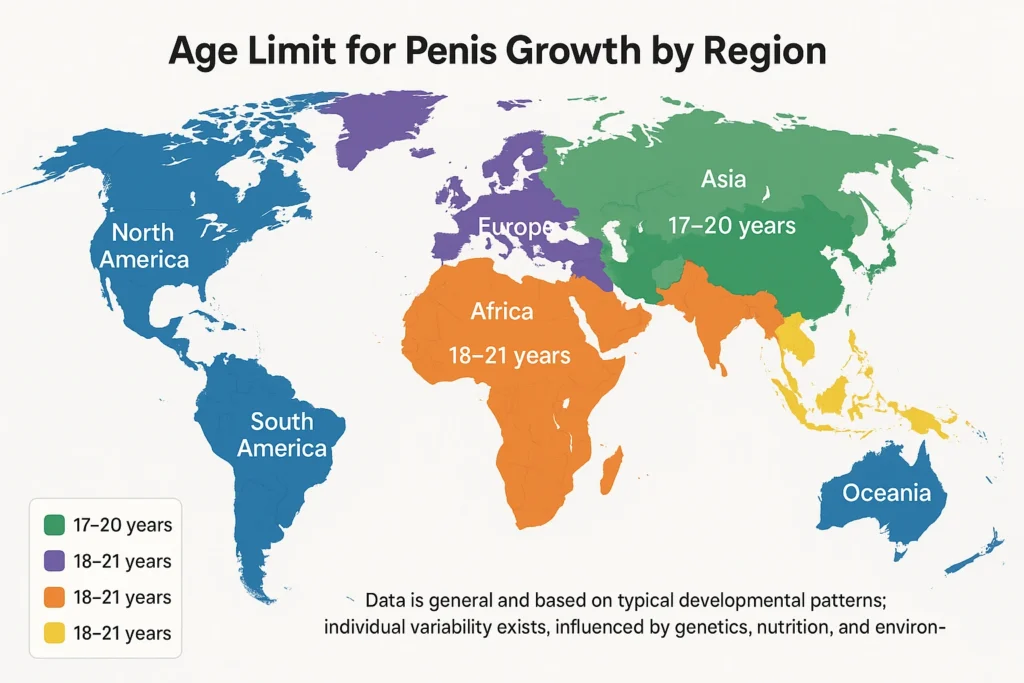
Penis growth usually stops near the end of puberty, commonly in the mid-to-late teens. Many boys reach adult genital size by around 16 to 18, but there is no single stopping age that applies to everyone. The stage of puberty matters more than a birthday.
That can feel unsatisfying when you want a clear date. Puberty, though, does not follow a school timetable. Two boys in the same class can be at different points in development, and comparing them can create worry without giving either one useful information.
Understanding the usual sequence helps you ask better questions: Has puberty started? Is it progressing? Is there a reason to arrange a medical assessment? Those questions are more useful than trying to match your body to an online photograph or size chart.
When Does Penis Growth Usually Stop?
Most noticeable penis growth happens during puberty. As development reaches its final stage, the genitals reach adult maturity. Puberty often takes about two to five years, although timing varies by individual.
There is no reliable way to look at your age alone and calculate how much growth remains. A teenager who started puberty relatively recently has a different developmental history from someone the same age who began several years earlier.
So, what age does the penis stop growing? The useful answer is usually the mid-to-late teenage years, with individual variation. Use that range as a general guide, not a deadline your body must meet.
Can the Penis Grow After Age 18?
Growth may continue after 18 if puberty is still incomplete, including in some people with delayed development. Turning 18 does not automatically end an ongoing biological process. However, delayed or incomplete puberty at that age deserves medical assessment; it should not simply be assumed to be harmless late blooming.
Online claims that everyone has several extra years of substantial growth are misleading. If you are unsure whether your development is complete, a clinician can assess your puberty stage and medical history.
Does Penis Growth Continue After Puberty Ends?
Once genital development has reached adult maturity, further natural pubertal growth is generally not expected. An erection can change the penis’s temporary size and firmness, but that is different from developmental growth.
This distinction matters when judging enlargement claims. A temporary change in appearance does not show that someone has restarted puberty or permanently increased the amount of penile tissue.
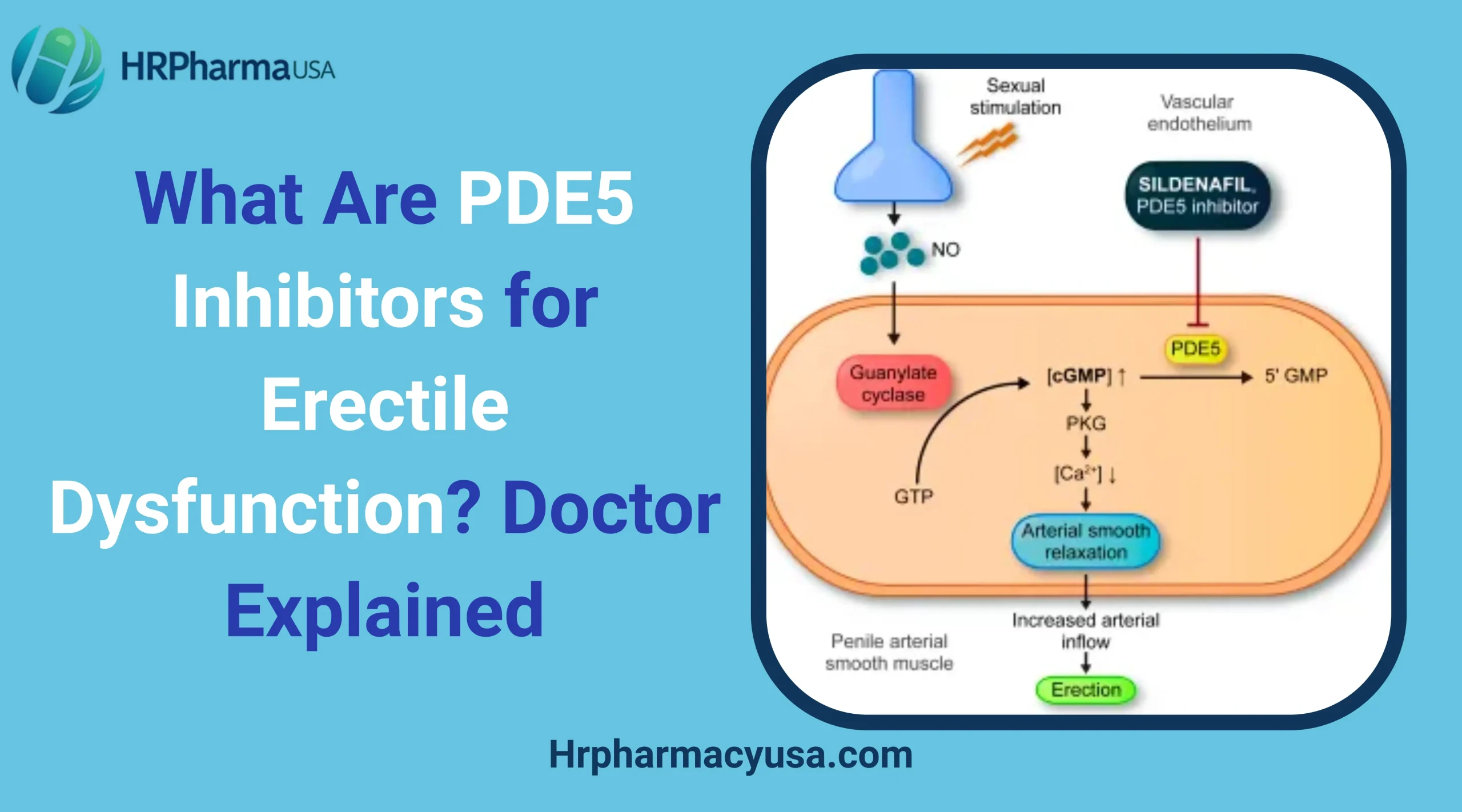
Our guide to cGMP and erectile function explains the blood-flow signaling involved in erections.
Penis Growth Stages During Puberty
Clinicians describe physical development using Tanner stages. These stages show a usual sequence, rather than fixed ages. Clinicians assess genital development and pubic hair separately, so hair alone cannot tell you exactly how far genital development has progressed.
| Puberty stage | Typical genital changes |
| Tanner stage 1 | Genitals remain at a prepubertal stage. |
| Tanner stage 2 | The testicles and scrotum enlarge; penile growth is still limited. |
| Tanner stage 3 | Penis growth becomes more noticeable, particularly in length. |
| Tanner stage 4 | Further length and width develop, including changes in the glans, or head. |
| Tanner stage 5 | Genitals reach adult maturity. |
The table is a broad developmental guide, not a tool for diagnosing yourself.
Testicular Growth Usually Comes First
Most boys begin puberty between ages 9 and 14. The earliest clear physical sign is usually testicular enlargement. More obvious penis growth follows. That means a boy can have started puberty even when he has not noticed much change in penis size.
Early changes can be subtle. If your main concern is that your penis seems unchanged, a doctor will consider the testicles and the wider pattern of development. You don’t need to take repeated measurements to determine whether puberty has begun.
Penis Length and Width Develop Gradually
During puberty, growth generally becomes noticeable in length before the penis develops more width. These changes unfold over time; they don’t all arrive at once.
Checking every day is unlikely to provide a useful view of a process that takes years. It can also lead you to treat ordinary differences in appearance as evidence that something has suddenly changed. A clinical assessment is more informative when you have a persistent concern.
Does Penis Growth Happen Before or After Voice Changes?
Penis growth and voice changes occur during overlapping parts of puberty. Voice cracking or deepening does not mark an exact start or finish for genital growth. Some changes will be more noticeable to you than others.
Think of puberty as several changes moving forward together, each at its own pace. One obvious sign cannot act as a countdown for every other part of development.
Does Late Puberty Mean Penis Growth Happens Later?
Yes, later puberty can shift genital growth later as well. A common explanation is constitutional delay of growth and puberty, often called being a late bloomer. It frequently runs in families, although family history alone does not establish the diagnosis.
Can puberty start at 15 in boys? Yes, but someone without testicular enlargement by 14 should already be evaluated. Knowing that a parent developed late is useful information to share with the doctor, rather than a reason to put off the appointment.
Does Late Puberty Affect Adult Penis Size?
Starting later does not, by itself, establish what your adult penis size will be. Constitutional delay is different from a persistent hormone deficiency or a problem affecting the testicles. Those conditions can look similar early on, which is why identifying the cause matters.
Avoid predictions in either direction. A late start does not automatically mean a smaller adult penis, and it does not guarantee extra growth or a larger final size. The next step is understanding your development, not guessing the final result.
What Is a Normal Penis Size During Puberty?
No single measurement applies to every teenager. Clinicians interpret size in context, using appropriate reference ranges and considering physical development. Research on childhood and teenage genital growth also considers sexual maturity stage.
The word “normal” can sound like one exact target. In medicine, it usually describes a range. Being different from a classmate, an image, or an internet average does not establish that your development is abnormal.
Why Average Penis Size by Age Can Be Misleading
A chart that lists one number for each birthday leaves out important context. It may not explain which population was studied, how measurements were taken, or whether participants were at the same stage of puberty.
An average is also not a minimum requirement. Many healthy people fall below an average, and many fall above it. Applying adult measurements to a teenager who is still developing adds another source of confusion.
If a chart has worried you, bring the concern to your appointment. The doctor can explain whether the reference is appropriate and whether you need an examination. You do not need to arrive with a diagnosis.
Flaccid Appearance Does Not Tell the Whole Story
The appearance of a flaccid penis does not reliably show its size when erect. Comparing how bodies look at rest therefore gives an incomplete picture.
More broadly, a photograph cannot replace a developmental assessment. It does not provide the person’s puberty stage, medical history, or a standardized measurement. Those missing details matter far more than the confidence of an online caption.
How Doctors Assess Penis Size During Puberty
When measurement is medically necessary, a clinician may assess stretched penile length: the length of the flaccid penis when gently extended using a standardized method. The clinician interprets the result against appropriate reference data.
Micropenis is a specific medical diagnosis involving a normally formed penis with a stretched length substantially below the expected range. It is not a casual label for any penis that looks small.
If you are concerned, ask for an assessment instead of repeatedly measuring or attempting to stretch the penis yourself. You can ask the clinician to explain the purpose of an examination before it begins.
What Affects Penis Growth During Puberty?
Penis growth depends on hormonal signals and the body’s response. Health conditions and treatments can also influence development. Looking at the whole picture is more useful than assuming one food, habit, or hormone value explains everything.
Hormones and Individual Development
During puberty, signals from the brain and pituitary gland stimulate the testicles to produce more testosterone. Testosterone helps drive genital growth and other physical changes.
However, “testosterone makes the penis grow” does not mean that taking extra testosterone is an appropriate way to increase normal size. Clinicians use hormone treatment for specific medical indications. Hormone deficiency, genetic conditions, and differences in hormone response require individual assessment.
Never use someone else’s hormone medication to try to speed up puberty. If you suspect a hormone problem, have it assessed rather than relying on a supplement advertisement or an adult laboratory range.
Adult readers can explore our separate guide to hormones and erectile dysfunction for information about hormonal effects on erection quality.
Nutrition and Underlying Health Conditions
Insufficient nutrition and some chronic illnesses can delay puberty. Problems involving the testicles, hormone system, or brain can also affect its timing. Treating an underlying condition may help development progress.
Supporting your health means eating adequately and getting help for persistent symptoms. It does not require buying a special “growth diet.” A food marketed as a testosterone booster should not be treated as a proven way to increase penis size.
If you have ongoing weight loss, digestive symptoms, or a condition requiring regular treatment, mention these alongside your puberty concerns. What seems unrelated may help the clinician understand your overall health.
Does Early Puberty Change the Growth Timeline?
Puberty that starts early can bring genital changes earlier as well. Progressive enlargement of the penis or testicles before age 9 should be discussed with a pediatrician. Early pubic hair alone can have a different explanation and does not necessarily mean full puberty has started.
An early start is not a reliable way to predict final penis size. It is a reason to assess the developmental pattern and decide whether monitoring or further investigation is needed.
Can Puberty Blockers Affect Penis Growth?
Yes. Puberty blockers suppress the hormone signals that drive pubertal changes. In someone with testicles, they can limit further growth of the penis, scrotum, and testicles while treatment is active.
Puberty generally resumes when blockers are stopped without further hormone suppression, but later development depends on the treatment pathway and individual circumstances. Discuss their effects, monitoring, and implications with the prescribing specialist.
Someone receiving hormone-related treatment needs guidance tailored to that treatment. General puberty age ranges cannot answer every question about their expected development.
When to See a Doctor About Delayed Puberty in Boys
Arrange a medical assessment if there has been no testicular enlargement by age 14. This is a key clinical threshold for delayed puberty in boys. Pubic hair or body odor alone should not replace an assessment of testicular development.
Also seek advice if puberty starts but does not seem to progress, or if overall growth is unusually slow. You can raise concerns earlier if they are troubling you; there is no need to wait until a particular birthday to ask for help.
Sudden, severe testicular pain needs emergency assessment because it may be testicular torsion. Do not wait for a routine puberty appointment in that situation.
What Doctor Treats Delayed Puberty?
Start with a pediatrician or primary care doctor. A pediatric endocrinologist specializes in childhood growth and hormone conditions and may assess delayed puberty.
You do not need to identify the right specialist yourself before getting care. Explain what you have noticed, when the concern began, and whether any other health changes are happening. Your first doctor can decide what assessment or referral is appropriate.
How Doctors Check for Delayed Puberty
The assessment usually includes a medical and family history, a review of growth records, and a physical examination. The clinician may ask when relatives started puberty and review medications or ongoing illnesses.
Depending on the findings, tests may include:
- Early-morning testosterone, luteinizing hormone (LH), and follicle-stimulating hormone (FSH).
- Thyroid tests or other blood tests suggested by the clinical history.
- A hand and wrist X-ray to assess bone age.
- Selected imaging or genetic tests when there is a specific reason.
Not everyone needs all these tests.
Bone age helps assess skeletal maturity and remaining height growth. It does not predict an exact future penis length. Clinicians should interpret test results alongside your development, rather than comparing them with isolated numbers online.
What Treatment Might Involve
Treatment depends on the cause. Constitutional delay may need reassurance and follow-up. Some boys are offered a short, supervised course of testosterone to help initiate puberty. Persistent hormone deficiencies can require longer treatment.
Medical treatment supports development when there is a diagnosed reason. It does not promise a chosen adult penis size. Ask what the treatment aims to achieve, how they’ll monitor progress, and when the next review should happen.
That gives you a concrete plan to follow instead of leaving you to judge every small physical change on your own.
Can You Make Your Penis Grow Faster During Puberty?
No proven home method safely makes normal pubertal penis growth happen faster. Advertised enlargement pills, lotions, pumps, and exercises should not be mistaken for treatment of delayed puberty. Some can cause harm.
Wanting a quick answer is understandable. The problem is that a strong promise can sound convincing even when the evidence behind it is weak. Look for an assessment of your development before considering anything sold as a solution.
Do Pills or Supplements Increase Penis Growth?
Penis-enlargement pills and lotions have not been proven to produce the growth they advertise. A bottle labeled “natural” or “male enhancement” does not establish that its ingredients are effective or safe.
The FDA also warns that products marketed for sexual enhancement can contain dangerous, undisclosed drug ingredients. Attractive packaging, testimonials, and online availability do not remove that risk.
If a product claims to fix delayed puberty without an examination or diagnosis, question the claim.
Do Exercises or Stretching Increase Size?
Exercises such as jelqing lack scientific proof of effectiveness and can cause pain, scarring, or injury. Do not try to force pubertal growth through pulling, weights, or aggressive manipulation.
Medical traction devices have been studied in some adult situations, but that evidence does not establish a safe method for teenagers to accelerate development.
The existence of a medical device does not mean a home version is appropriate for you. A growing body should not become an experiment based on an online routine.
Can Weight Loss Make a Penis Look Bigger?
Sometimes surrounding tissue hides part of a normally sized penis. Reducing excess fat around the pubic area may reveal more of the shaft in some people, but it does not create new penile tissue. A buried penis can also have causes unrelated to weight.
For a teenager, discuss weight concerns with a clinician who can consider ongoing growth and nutritional needs. Avoid turning a question about genital appearance into a crash diet. The goal is healthy development and comfortable function.
Handling Worries About Puberty and Body Image
Questions about genital development can feel awkward to say aloud. A quiet concern may grow much larger when your only reference points are jokes, advertising, or comparisons with other people.
Parents can help by respecting privacy and avoiding teasing about physical changes. A teenager does not need a running commentary on their body, even when the intention is friendly.
Try making room for a simple conversation: “If anything about puberty worries you, we can ask the doctor.” That gives the teenager an opening without requiring them to explain everything immediately.
If you are the person feeling worried, write down your question before the appointment. You can hand it to the clinician if speaking feels difficult. Ask for a clear explanation of what they found and whether follow-up is needed.
You deserve an answer that relates to your health. Your body is not a competition, and an online comment cannot determine whether your development is normal.
Conclusion
When does penis growth stop? Usually near the end of puberty, commonly in the mid-to-late teens. The exact timing varies, so age alone cannot show whether growth is complete. Seek an assessment if there is no testicular enlargement by 14, development seems stalled, or you have persistent concerns. A clinician can evaluate the whole pattern and explain whether reassurance, follow-up, or treatment is appropriate.
FAQs
Does Masturbation Stop Penis Growth?
No. Masturbation does not stunt growth or stop puberty. You do not need to avoid it to protect normal development. If you have concerns about growth, discuss them with a clinician rather than blaming a normal behavior.
Does Having Erections Mean Penis Growth Has Finished?
No. Erections occur during puberty while physical development is still happening. Having them does not establish that the penis has reached adult size, and erection frequency is not a reliable way to judge remaining growth.
Can Viagra or Cialis Make the Penis Grow?
No. Sildenafil and tadalafil are used to treat erection problems by improving blood flow. Their effect on erections is different from pubertal tissue growth, so they should not be used to try to increase penis size or speed up puberty. Discuss any medication question with a clinician.
Is It Normal for One Testicle to Hang Lower Than the Other?
Yes, a difference in how low the testicles hang is common. It does not, by itself, mean that puberty or penis growth is abnormal. Sudden pain, swelling, or a new lump is a separate concern that needs medical attention.
How Can a Teenager Bring Up Puberty Concerns With a Doctor?
Start with one sentence: “I’m worried about whether my puberty is progressing normally.” You can write it down, ask to speak privately, or bring a trusted adult for support. Ask what an examination involves and what privacy rules apply. You do not need medical vocabulary to describe your concern.