
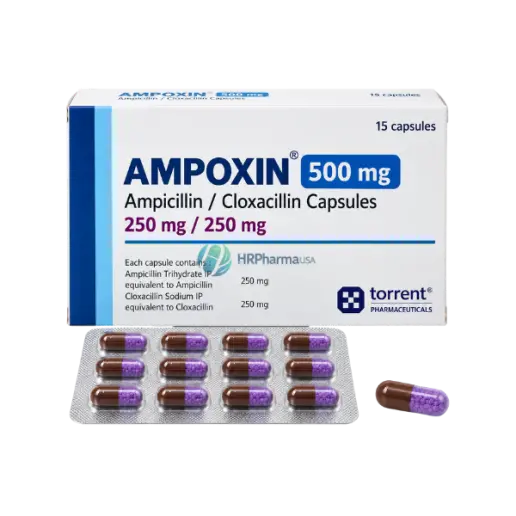
Ampoxin 500 mg (Ampicillin/Cloxacillin)
Ampoxin 500 mg capsules combine ampicillin 250 mg and cloxacillin 250 mg to treat selected bacterial infections. Use only as prescribed, with attention to penicillin allergies, interactions, and treatment instructions.
| Active Ingredient: | Ampicillin/Cloxacillin |
|---|---|
| Indication: | Bacterial Infections |
| Manufacturer: | Torrent Pharmaceuticals Ltd |
| Strength: | 250mg/250mg |
| Packaging: | 15 capsules in strip |
Ampoxin 500 mg (Ampicillin/Cloxacillin)
| Variant | Price | Units | Quantity | Add to Cart |
|---|---|---|---|---|
| 60 Capsule/s | $19.00 | $0.32 / Capsules | ||
| 90 Capsule/s | $26.00 | $0.29 / Capsules | ||
| 120 Capsule/s | $32.00 | $0.27 / Capsules |
What is Ampoxin 500 mg?
Ampoxin 500 mg is an oral prescription antibiotic containing two penicillins: ampicillin and cloxacillin. Each capsule supplies 250 mg of each ingredient, for a combined strength of 500 mg.
A clinician selects this combination when the suspected or identified bacteria are susceptible to treatment. Two antibiotics in one capsule do not make it suitable for every infection. The infection site, laboratory results, local resistance patterns, and your medical history all influence the choice.
| Brand | Ampoxin |
| Labeled strength | 500 mg combined active ingredients per capsule |
| Ampicillin content | 250 mg, as ampicillin trihydrate |
| Cloxacillin content | 250 mg, as cloxacillin sodium |
| Dosage form | Hard gelatin capsule |
| Route | Oral |
| Drug class | Penicillin antibiotics; beta-lactam antibacterials |
| Prescription status | Prescription medicine |
| Manufacturer listed in Torrent’s product information | Torrent Pharmaceuticals Ltd., India |
| Marketer listed in Torrent’s product information | Torrent Pharmaceuticals Ltd. |
| Storage | Cool, dry place; protect from light and moisture |
What is Ampoxin used for?
- Bronchopneumonia and bacterial exacerbations of chronic bronchitis.
- Certain ear, nose, and throat infections.
- Infected surgical wounds and lung infections following surgery.
The labeling also includes conditions requiring specialist management, such as bone infections and infection following childbirth. Serious infections may require hospital care and injectable antibiotics; oral capsules should not delay assessment.
These uses depend on bacterial susceptibility. A cough, sore throat, or fever alone does not establish that Ampoxin is appropriate. It does not treat colds, influenza, or other viral infections.
How ampicillin and cloxacillin work
Both ingredients interfere with the bacterial cell wall, an essential protective structure. This action kills susceptible bacteria as they grow.
Ampicillin acts against a range of susceptible bacteria. Cloxacillin resists breakdown by certain penicillinase enzymes produced by staphylococci, allowing it to treat some bacteria that resist ordinary penicillin.
This protection has limits. Cloxacillin does not make the combination effective against every resistant organism, and Ampoxin does not treat methicillin-resistant Staphylococcus aureus, commonly called MRSA. Culture and susceptibility testing can help determine whether you need a different antibiotic.
How to take Ampoxin
Take the capsules exactly as prescribed, with water. Ampoxin’s product information directs you to take it 30–60 minutes before meals. Follow the instructions supplied with your prescription and ask your pharmacist to resolve any conflicting directions.
The number of capsules per dose, interval between doses, and treatment length depend on the infection and individual clinical factors. The 500 mg capsule strength is not your prescribed daily dose. Kidney or liver impairment may require regimen changes.
Keep doses spaced as directed. Continue for the prescribed duration unless your clinician changes treatment or a serious reaction requires you to stop. Do not share capsules, save them for another illness, or restart leftover antibiotics. The CDC explains why taking antibiotics exactly as prescribed helps protect patients from avoidable harm and resistance.
If swallowing capsules is difficult, ask about an appropriate formulation rather than changing the capsule yourself.
Monitoring and response to treatment
Contact your prescriber if symptoms worsen, fail to improve during the first few days, or return after treatment. Persistent symptoms may require reassessment, further testing, or a different medicine.
During prolonged treatment, clinicians may monitor blood counts and kidney and liver function. Monitoring may be particularly important with higher exposure, existing organ impairment, or interacting medicines. Ampicillin can also interfere with some urine glucose tests, so tell the clinician or laboratory that you are taking it.
Side effects and urgent warning signs
More common effects
Nausea and diarrhea are common reported effects. Vomiting can also occur. Contact your pharmacist or prescriber if stomach symptoms persist, interfere with eating or drinking, or become troublesome.
Rash, itching, and hives are also reported. These can signal an allergy: stop taking the medicine and obtain prompt medical advice if they develop.
When to seek urgent care
Stop taking Ampoxin and call 911 for trouble breathing, throat tightness, facial or tongue swelling, or collapse. These may indicate a severe allergic reaction.
Seek urgent medical assessment for:
- A painful, blistering, or peeling rash, especially with mouth sores or fever.
- Severe, persistent, watery, or bloody diarrhea, with or without abdominal cramps or fever. Antibiotic-associated colitis can occur during treatment or weeks afterward.
- Yellow skin or eyes, dark urine, substantially reduced urination, unusual bruising, or unexplained bleeding.
- A seizure or a major change in alertness.
Who should avoid Ampoxin or discuss precautions?
Do not take Ampoxin if you have a known allergy to its ingredients or a history of hypersensitivity to penicillins or cephalosporins.
Before treatment, tell your prescriber about kidney disease, liver disease, previous severe antibiotic-associated diarrhea, or other significant medical conditions. Avoid ampicillin when infectious mononucleosis or lymphoid leukemia is suspected because ampicillin-associated rashes are more likely in these settings.
Children need a prescription based on their clinical needs and an appropriate formulation. An adult capsule should not be used to estimate a child’s dose.
Important medicine interactions
- Allopurinol: can increase the likelihood of an ampicillin-associated rash.
- Probenecid: can raise and prolong antibiotic blood levels.
- Methotrexate: penicillins can reduce its clearance and increase toxicity.
- Warfarin: antibiotic treatment may affect anticoagulation; you may need additional INR monitoring.
- Other antibiotics, sulfonamides, and aspirin: ask the pharmacist to check the combination and its clinical significance.
Do not stop another prescribed medicine or alter its dose without professional advice.
Most broad-spectrum antibiotics do not reduce the effectiveness of combined hormonal contraception, according to CDC contraceptive guidance. However, vomiting or severe diarrhea can affect absorption of oral contraceptive pills. Ask your pharmacist how to follow your specific contraceptive’s illness or missed-pill instructions.
Pregnancy and breastfeeding
Tell your clinician if you are pregnant, planning pregnancy, or breastfeeding before starting treatment. Human evidence for the exact Ampoxin combination is limited, so use requires assessing the infection, available alternatives, and potential risks.
Penicillins can often be used during breastfeeding with infant monitoring, but suitability must be assessed individually. If treatment is prescribed, watch the baby for diarrhea, thrush, rash, or feeding changes. Seek specialist advice if your infant is premature or unwell.
Missed doses and storage
If you miss a dose, take it when remembered unless the next dose is nearly due. In that case, skip the missed dose and resume the prescribed schedule. Do not double the next dose. Ask your pharmacist if you have missed several doses or are unsure how to resume.
Keep capsules in their original packaging, in a cool, dry place protected from light and moisture. Follow any additional temperature instructions on the supplied pack. Keep out of reach of children and do not use after expiry. Ask a pharmacist how to dispose of unused capsules safely.
Other strengths and treatment alternatives
Torrent’s product information also lists Ampoxin 250 capsules containing ampicillin 125 mg plus cloxacillin 125 mg. A different strength requires the prescriber’s instructions; it is not an automatic substitution.
Other antibiotics may be more appropriate depending on the organism, infection site, allergy history, and susceptibility results. Ampicillin alone does not contain cloxacillin. A pharmacist or prescriber must assess any proposed replacement rather than relying on a similar brand name or the same total milligram strength.
FAQs
1. Does Ampoxin 500 mg contain 500 mg of ampicillin?
2. Is Ampoxin the same as amoxicillin/clavulanate?
3. Can Ampoxin treat a cold or the flu?
4. Can children take Ampoxin 500 mg capsules?
5. How soon should symptoms improve?
| size | 120 Capsule/s, 60 Capsule/s, 90 Capsule/s |
|---|
Please sign in to My Account to leave a review.
Reviews
There are no reviews yet.