
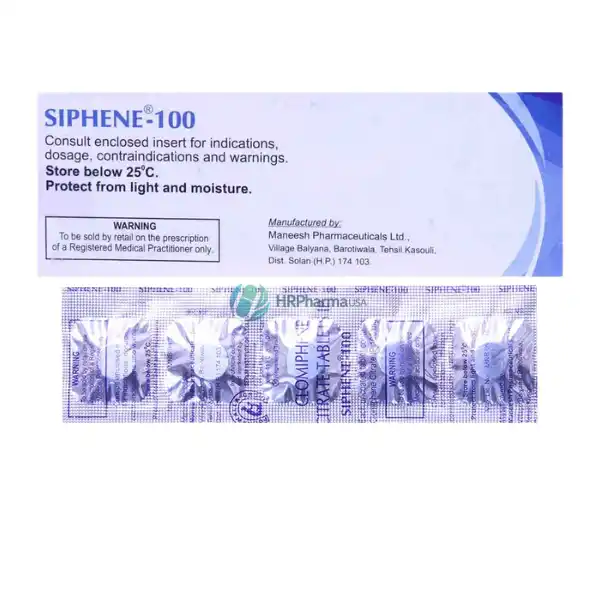
Siphene 100 mg (Clomiphene)
| Active Ingredient: | Clomiphene |
|---|---|
| Indication: | Female infertility |
| Manufacturer: | Serum Institute of India Pvt. Ltd. |
| Packaging: | 5 tablets in 1 strip |
| Strength: | 100mg |
| Delivery Time: | 6 To 15 days |
Siphene 100 mg (Clomiphene)
| Variant | Price | Units | Quantity | Add to Cart |
|---|---|---|---|---|
| 30 Tablet/s | $33.00 | $1.1 / Tablet | ||
| 60 Tablet/s | $52.50 | $0.88 / Tablet | ||
| 90 Tablet/s | $75.00 | $0.83 / Tablet |
Product Info About Siphene 100 mg (Clomiphene)
Siphene 100 mg (Clomiphene) is a prescription fertility medicine containing clomiphene citrate, a selective estrogen receptor modulator (SERM).
It is best known for helping trigger ovulation in people who do not ovulate regularly, including some patients with PCOS (polycystic ovary syndrome). In certain cases, clinicians also use clomiphene off-label in men as part of an infertility or hormone-support plan.
What Siphene 100 mg is used for
- Ovulation induction in people with irregular or absent ovulation
- Unexplained infertility in some treatment plans, when ovulation timing needs support
- Off-label male fertility support, where a clinician is trying to improve the body’s own hormone signalling (use varies and is not the same for everyone)
How clomiphene works
Siphene 100 mg (Clomiphene) works by changing how the brain senses estrogen. When the brain thinks estrogen is lower than it is, it may release more gonadotropins (mainly FSH and LH). In women, this can support follicle growth and help the body release an egg (ovulation).
In men, the same hormone signalling pathway is one reason some clinicians consider clomiphene, since FSH and LH influence testosterone production and sperm development.
Why the 100 mg dose may be prescribed
- A lower dose did not lead to ovulation.
- The prescriber is following a step-up approach based on cycle response.
- The clinical goal requires a stronger stimulation (only under careful supervision)
What monitoring may look like
- Cycle timing guidance and symptom tracking
- Ultrasound to check follicle development in some patients
- Blood tests for hormone levels when needed
Possible side effects and safety notes
- Hot flashes
- Headache
- Nausea or stomach discomfort
- Breast tenderness
- Mood changes
- Bloating
- Vision changes (blurred vision, spots, flashes)
- Significant pelvic pain or swelling
- Shortness of breath or severe abdominal symptoms
- Signs of an allergic reaction
Available strengths
- Clomiphene 50 mg
- Clomiphene 25 mg
- Clomisign 50 mg (Clomiphene)
- Some listings also include 100 mg tablets like this product.
Substitutes and alternatives
- Generic clomiphene citrate tablets (often 50 mg)
- Brand or brand-style options may include names such as Clomid (brand availability varies) and other manufacturer brands that contain clomiphene citrate.
- Clofert 50 mg (Clomiphene)
- Enclomisign 50 Tablet
- Letrozole (Femara) commonly used for ovulation induction, especially in PCOS
- Gonadotropin injections (FSH or FSH/LH products) in monitored cycles
- Other fertility protocols based on the individual situation and testing results
FAQs
1. Can Siphene 100 mg (Clomiphene) be taken with food?
2. What if I miss a dose?
3. Is alcohol allowed while taking clomiphene?
4. How long does clomiphene stay in the body?
5. Does clomiphene work as birth control?
| size | 30 Tablet/s, 60 Tablet/s, 90 Tablet/s |
|---|
Please sign in to My Account to leave a review.
Reviews
There are no reviews yet.