
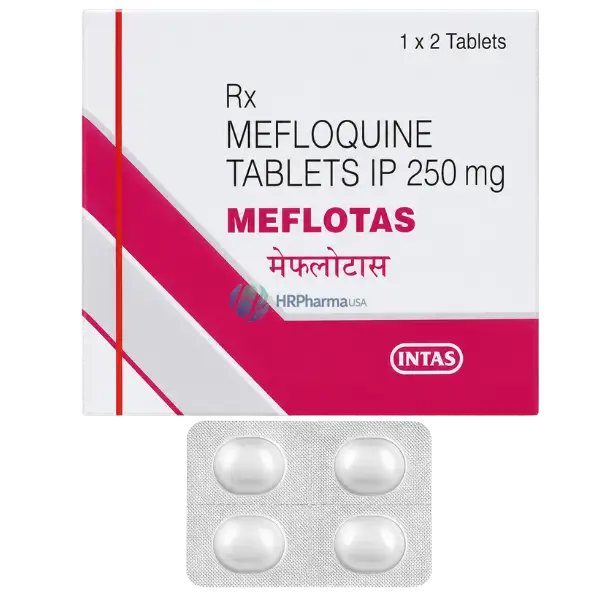
Meflotas 250 Mg (Mefloquine)
| Active Ingredient: | Mefloquine |
|---|---|
| Indication: | Malaria |
| Manufacturer: | Intas Pharmaceuticals Ltd. |
| Packaging: | 2 tablets in 1 strip |
| Strength: | 250mg |
| Delivery Time: | 6 To 15 days |
Meflotas 250 Mg (Mefloquine)
| Variant | Price | Units | Quantity | Add to Cart |
|---|---|---|---|---|
| 50 Tablet/s | $75.00 | $1.5 / Tablet | ||
| 100 tablet/s | $130.00 | $1.3 / Tablet | ||
| 200 tablet/s | $220.00 | $1.1 / Tablet |
Information About Meflotas 250 Mg (Mefloquine Tablets)
Meflotas 250 mg (Mefloquine) is an antimalarial medicine used to prevent or treat certain types of malaria. Mefloquine works against malaria parasites when they are present in red blood cells. Whether this medicine is suitable depends on where the malaria infection was acquired, local drug resistance, the type of malaria parasite, and the patient’s medical history.
Malaria can become serious very quickly, so treatment should be selected by a healthcare professional rather than based only on the medicine name or strength. Current CDC treatment guidance also places mefloquine behind other preferred treatment options in several situations because of its safety profile and resistance concerns.
What Is Mefloquine?
Mefloquine is a quinoline antimalarial medicine. It has been used both as a malaria prevention medicine for certain travelers and as a treatment option for malaria caused by susceptible parasites.
The medicine has a long elimination time in the body. The current prescribing information reports an average elimination half-life of about three weeks, although it can vary between individuals. This long action is one reason mefloquine may be used on a weekly schedule when prescribed for malaria prevention.
Mefloquine does not protect against mosquito bites. Travelers using an antimalarial medicine should still use suitable insect repellent, protective clothing, and mosquito nets when appropriate.
Uses of Meflotas 250 Mg
Meflotas 250 Mg may be prescribed for:
- Prevention of malaria in suitable travelers visiting certain malaria-risk areas
- Treatment of mild to moderate malaria caused by mefloquine-sensitive Plasmodium falciparum
- Treatment of certain Plasmodium vivax malaria infections
- Malaria situations where a healthcare professional has confirmed that mefloquine remains an appropriate option
Mefloquine is not suitable for every malaria region. Resistance has been reported in parts of the world, particularly in Southeast Asia, so your travel destination matters when choosing malaria prevention or treatment.
For current malaria treatment in the United States, CDC guidance generally favors medicines such as artemether-lumefantrine or atovaquone-proguanil for many uncomplicated P. falciparum infections, with mefloquine reserved for situations where other options cannot be used.
How Meflotas 250 Mg Works
Mefloquine acts against the blood stages of malaria parasites. These stages are associated with malaria symptoms such as fever, chills, sweating, headache, and weakness.
Its exact mechanism is not fully established, but it acts as a blood schizonticide, targeting malaria parasites developing inside red blood cells. It does not remove dormant liver-stage parasites associated with some forms of P. vivax or P. ovale malaria. Additional treatment may therefore be needed when a clinician determines that relapse prevention is necessary.
Available Strengths
Current U.S. prescription labels reviewed through DailyMed list Mefloquine Hydrochloride Tablets USP 250 mg. A 250 mg mefloquine hydrochloride tablet is equivalent to approximately 228 mg of mefloquine base. These are two different ways of describing the same medicine and should not be treated as separate tablet strengths.
At present, I did not find another standard tablet strength in current U.S. mefloquine labeling. Meflotas packaging sold in other markets may describe the active ingredient differently, so always check the strength shown on the original package before use.
Meflotas 250 Mg Substitutes and Alternatives
A direct substitute should normally contain the same active ingredient and equivalent strength.
Current U.S. DailyMed listings include generic Mefloquine Hydrochloride Tablets USP 250 mg marketed under approved generic labels, including products packaged by Teva Pharmaceuticals USA and Chartwell RX. Product availability at individual pharmacies can change.
Other antimalarial medicines are sometimes considered alternatives rather than direct substitutes. Depending on the purpose of treatment, destination, malaria species, drug resistance, pregnancy status, age, and medical history, options may include:
- Atovaquone-proguanil
- Artemether-lumefantrine
- Doxycycline
- Chloroquine
- Hydroxychloroquine
- Primaquine
- Tafenoquine
You can’t simply exchange these medicines tablet-for-tablet with mefloquine. Each has different uses, restrictions, dosing schedules, and resistance considerations.
Important Safety Information
Mefloquine carries an important warning because serious psychiatric and neurologic reactions can occur. Reported reactions include anxiety, depression, unusual behavior, hallucinations, dizziness, balance problems, and other nervous system symptoms. Some reactions have continued after mefloquine was stopped.
For malaria prevention, mefloquine should not be prescribed to people with certain psychiatric conditions, including active depression, a recent history of depression, generalized anxiety disorder, psychosis, schizophrenia, other major psychiatric disorders, or a history of seizures.
People with heart rhythm problems, liver disease, seizure disorders, or those taking medicines that can affect heart rhythm or seizure control should make sure their healthcare professional has a complete medication and medical history before mefloquine is prescribed.
Possible Side Effects
Commonly reported effects of mefloquine include:
- Nausea
- Vomiting
- Diarrhea or loose stools
- Stomach pain
- Headache
- Dizziness or vertigo
- Sleep problems or unusual dreams
Other reactions can occur, including serious neurologic, psychiatric, liver, heart, or vision-related problems. New mood changes, severe anxiety, confusion, hallucinations, seizures, major balance problems, yellowing of the skin or eyes, or significant vision changes require prompt medical evaluation.
FAQs
1. How should Meflotas 250 Mg be stored?
Store Mefloquine tablets at controlled room temperature, around 68°F to 77°F (20°C to 25°C), in a suitable closed container, and away from excess moisture. Always follow the storage directions printed on the original package.
2. Can I drive after taking Meflotas 250 Mg?
Use caution with driving, operating machinery, or other activities that require good balance and concentration until you know how mefloquine affects you. Dizziness, vertigo, or loss of balance can occur.
3. Can Meflotas tablets be crushed?
People who cannot swallow tablets whole may crush mefloquine tablets and mix them with a small amount of water, milk, or another suitable drink. For children, the correct amount must be based on the prescribed dose and body weight.
4. What should I do if I vomit after taking mefloquine?
Contact the prescribing healthcare professional, as another dose may be needed depending on how soon vomiting occurred. Do not automatically repeat a dose without checking the recommended dosing instructions for your situation.
5. Can malaria still occur while taking mefloquine?
Yes. No malaria prevention medicine provides complete protection. Mosquito bite prevention is still important, and fever or flu-like illness during or after travel to a malaria-risk area should be assessed promptly by a healthcare provider.
| size | 100 tablet/s, 200 tablet/s, 50 Tablet/s |
|---|
Please sign in to My Account to leave a review.
Reviews
There are no reviews yet.