
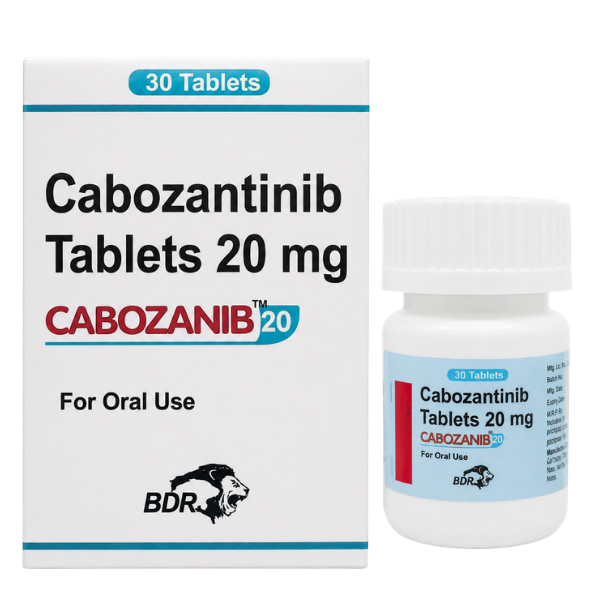
Cabozanib 20mg Tablets (Cabozantinib)
| Active Ingredient (Generic Name) | Cabozantinib |
|---|---|
| Indication | Treatment of Liver, Kidney & Thyroid cancer |
| Manufacturer | BDR Pharmaceuticals |
| Packaging | 30 Tablets in bottle |
| Strength | 20mg |
| Delivery Time | 6 To 15 days |
Cabozanib 20mg Tablets (Cabozantinib)
| Variant | Price | Units | Quantity | Add to Cart |
|---|---|---|---|---|
| 30 Tablet/s | $112.00 | $3.73 / Piece | ||
| 60 Tablet/s | $205.00 | $3.42 / Piece | ||
| 90 Tablet/s | $299.00 | $3.32 / Piece |
Information About Cabozanib 20mg Tablets
Cabozanib 20mg Tablets (Cabozantinib) contain cabozantinib, a prescription anticancer medicine known as a kinase inhibitor. It works by blocking several proteins involved in cancer-cell growth, tumor spread, and the development of blood vessels that can supply a tumor.
Cabozantinib is not suitable for every type of cancer or every patient. An oncologist selects it after reviewing the cancer diagnosis, previous treatments, overall health, test results, and other medicines being taken.
The information on this page is based mainly on current US prescribing information for cabozantinib tablets.
Cabozanib 20 mg Tablets Uses
Cabozantinib tablets may be prescribed for selected patients with certain advanced or metastatic cancers. Approved uses for the tablet formulation include:
- Advanced renal cell carcinoma, a form of kidney cancer
- Advanced renal cell carcinoma as first-line treatment with nivolumab
- Hepatocellular carcinoma after previous treatment with sorafenib
- Certain locally advanced or metastatic differentiated thyroid cancers
- Previously treated pancreatic neuroendocrine tumors
- Previously treated extra-pancreatic neuroendocrine tumors
The exact treatment plan depends on the cancer type and whether cabozantinib is being used alone or with another medicine. A 20mg tablet does not mean that 20mg is the standard starting dose for every patient. It may form part of a reduced or adjusted treatment schedule.
How Does Cabozantinib Work?
Cancer cells may use signaling proteins to grow, spread, survive, and develop a blood supply. Cabozantinib blocks the activity of several receptor tyrosine kinases, including VEGFR, MET, AXL, and RET.
Blocking these pathways may reduce tumor-cell growth and limit the development of new blood vessels around a tumor. The medicine does not work in the same way for every patient. Scans, blood tests, physical examinations, and symptom reviews help the oncology team assess the response to treatment.
How to Take Cabozanib 20mg Tablets
Take Cabozanib 20mg Tablets only in the dose prescribed by the treating cancer specialist. Cabozantinib tablets are generally taken once daily, but the prescribed strength and schedule can vary.
For the FDA-approved tablet formulation:
- Take the tablet on an empty stomach
- Take it at least one hour before eating or at least two hours after eating
- Swallow the tablet whole with water
- Do not crush, split, or chew the tablet
- Do not take a missed dose when the next scheduled dose is less than 12 hours away
- Do not take two doses together to replace a missed dose
The prescribed dose may be reduced or temporarily stopped if significant side effects occur. Patients should not change the strength, skip treatment repeatedly, or restart a paused dose without medical advice.
Cabozanib 20mg Dosage Information
Cabozantinib dosage depends on the cancer being treated, whether another anticancer medicine is included, and how well treatment is tolerated.
Under current Cabometyx labeling, commonly used tablet doses include 60mg once daily when used alone for certain conditions and 40mg once daily when combined with nivolumab for renal cell carcinoma. Dose reductions may move from 60mg to 40mg and then to 20mg when required.
This means the 20mg strength is commonly available for dose adjustment, but it should not be viewed as the correct dose for every patient. Only the treating specialist should decide whether a patient needs 20mg, 40mg, 60mg, or another adjusted schedule.
Common Side Effects of Cabozanib 20mg
Cabozantinib may cause side effects even when taken correctly. Their type and severity can depend on the dose, cancer type, combination treatment, and the patient’s health.
Commonly reported side effects include:
- Diarrhea
- Nausea or vomiting
- Constipation
- Tiredness or weakness
- Reduced appetite
- Weight loss
- Mouth soreness
- Changes in taste
- High blood pressure
- Redness, pain, or swelling on the hands and feet
- Rash or dry skin
- Stomach discomfort
Side effects should be reported early. Problems such as diarrhea, reduced food intake, mouth soreness, and hand-foot skin reactions may become more difficult to manage when treatment is delayed.
The oncology team may recommend supportive care, a short treatment break, or a lower dose depending on the severity of the reaction.
Serious Warnings and Precautions
Cabozantinib can cause serious complications. Patients and caregivers should know which symptoms need urgent medical attention.
Important risks include:
- Severe or unusual bleeding
- Holes or abnormal connections in the stomach or intestines
- Blood clots
- Very high blood pressure
- Heart failure
- Severe diarrhea
- Liver problems
- Protein in the urine
- Jawbone damage
- Poor wound healing
- Severe neurological reactions
- Thyroid changes
- Low calcium levels
Urgent medical help may be needed for coughing or vomiting blood, black stools, severe stomach pain, chest pain, sudden breathing difficulty, swelling in a leg or arm, sudden weakness, confusion, seizures, severe headaches, or major vision changes.
Blood pressure and laboratory results may need regular monitoring during treatment. Cabozantinib is normally stopped before planned surgery, including dental surgery, because it may raise the risk of bleeding and delayed healing.
Cabozanib Drug and Food Interactions
Cabozantinib levels can be changed by medicines that affect the CYP3A4 enzyme. Some products may increase the amount of cabozantinib in the body and raise the risk of side effects. Others may lower the amount and reduce its effect.
Before starting treatment, patients should tell their care team about:
- Prescription medicines
- Nonprescription medicines
- Vitamins
- Herbal products
- Antibiotics or antifungal medicines
- Seizure medicines
- HIV treatments
Grapefruit, grapefruit juice, and products containing grapefruit should usually be avoided. St. John’s wort may also affect treatment and should not be used unless the oncology team has reviewed it.
Available Cabozanib and Cabozantinib Strengths
Cabozantinib tablets are available in the following FDA-approved Cabometyx strengths:
- Cabozantinib 20mg Tablets
- Cabozantinib 40mg Tablets
- Cabozantinib 60mg Tablets
The tablets have different shapes to help identify the strengths. The FDA-approved 20mg tablet is round, the 40mg tablet is triangular, and the 60mg tablet is oval. Patients should still confirm the medicine using the original container and pharmacy label rather than relying only on appearance.
Substitute and Market Alternative Information
Cabometyx Tablets
Cabometyx is the FDA-approved tablet brand containing cabozantinib. It is marketed in 20mg, 40mg, and 60mg strengths. A switch between brands should be approved by an oncologist and checked by a licensed pharmacist.
Other Cabozantinib Tablet Brands
Cabozantinib tablets may be sold under different brand names outside the United States. Manufacturing standards, approval status, packaging, and inactive ingredients can differ. A product should not be treated as an automatic substitute simply because it contains the same active ingredient.
Cometriq Capsules
Cometriq contains cabozantinib in capsule form and is used for progressive metastatic medullary thyroid cancer. It is available as 20mg and 80mg capsules.
Cometriq capsules must not be substituted for cabozantinib tablets on a milligram-for-milligram basis. The tablet and capsule formulations have different prescribing instructions and approved uses.
FAQs
1. Can children take cabozantinib tablets?
Cabozantinib tablets have established uses for certain differentiated thyroid cancers and neuroendocrine tumors in patients aged 12 years and older. Safety and effectiveness have not been established for children younger than 12. Growth monitoring may be needed for adolescents with open growth plates.
2. Can Cabozanib 20mg affect fertility?
Cabozantinib may affect fertility in males and females. Patients who may want to have children in the future should discuss fertility preservation with their specialist before beginning treatment.
3. Do cabozantinib tablets contain lactose?
The FDA-approved Cabometyx tablet contains anhydrous lactose as an inactive ingredient. Other brands may use different ingredients, so the specific product leaflet should be checked when lactose or ingredient sensitivity is a concern.
4. How should cabozantinib tablets be stored?
The FDA-approved tablet should be stored at controlled room temperature, normally between 68°F and 77°F. Keep the medicine in its original container, protected from unsuitable storage conditions, and out of the reach of children.
5. Can older adults use cabozantinib?
Older adults were included in clinical studies of cabozantinib. Age alone does not decide whether treatment is suitable, but the oncology team may consider general health, organ function, other medicines, and the patient’s ability to manage side effects.
| size | 30 Tablet/s, 60 Tablet/s, 90 Tablet/s |
|---|
Please sign in to My Account to leave a review.

Reviews
There are no reviews yet.