A Giardia infection can turn life with your dog into a frustrating cycle of diarrhea, cleaning, medication, and more cleaning. Just when the stool appears to improve, it may become loose again. This pattern can leave owners wondering whether the treatment is working—or whether the parasite has returned.
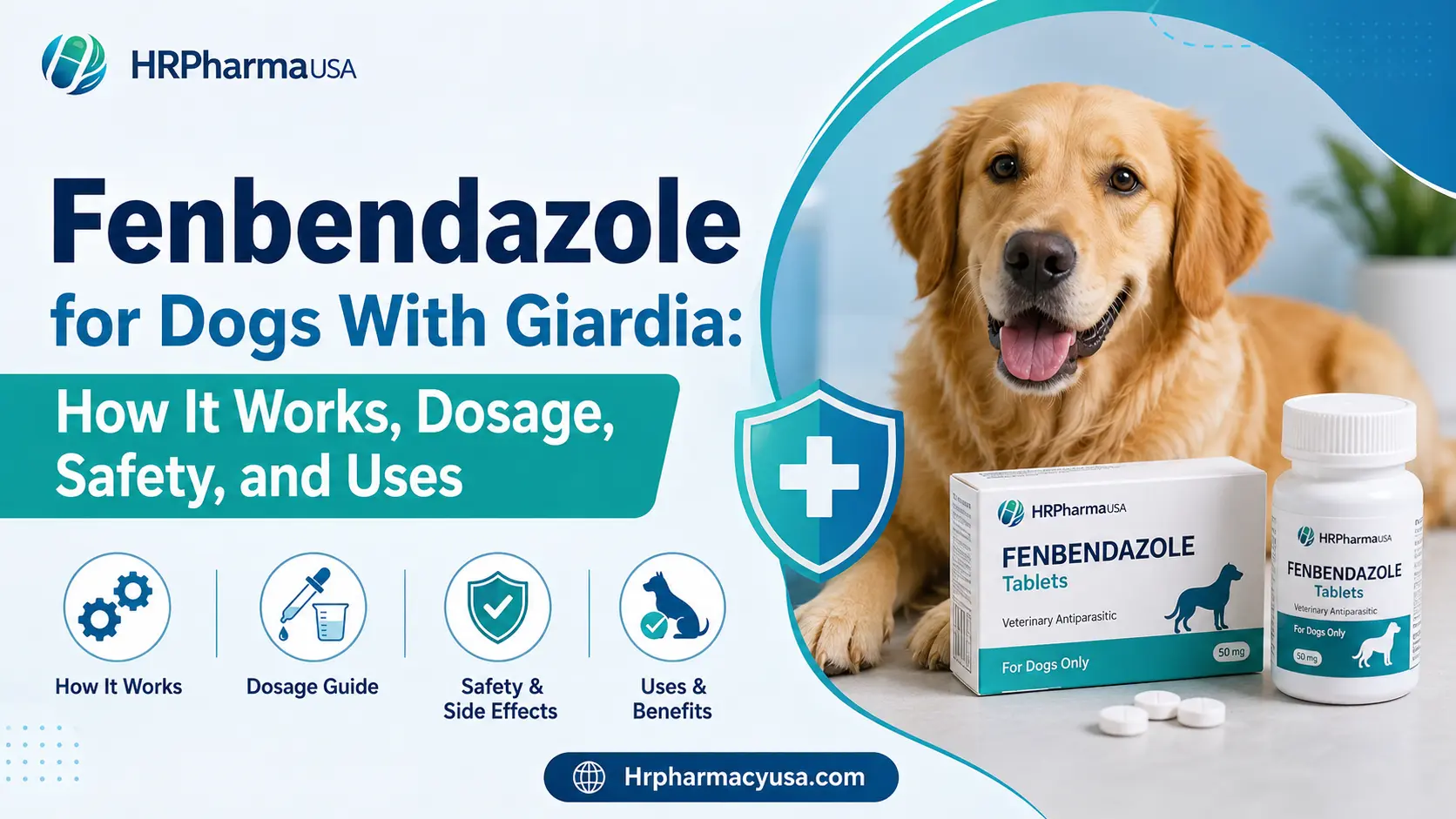
Fenbendazole is an antiparasitic medication commonly used by veterinarians to treat dogs with Giardia-related symptoms. It is also used to treat several intestinal worms. Although fenbendazole is generally considered well-tolerated when used correctly, Giardia treatment requires more than just choosing a dewormer from a store shelf.
The dog’s weight, age, overall health, medication concentration, treatment duration, and risk of reinfection all matter. Common canine fenbendazole products are labeled for certain intestinal worms rather than Giardia. Veterinarians may prescribe fenbendazole for Giardia as an extra-label use based on clinical guidance and the individual dog’s needs.
What Is Giardia in Dogs?
Giardia is a microscopic protozoan parasite that lives in the intestinal tract. The organism most commonly associated with infection in dogs belongs to the Giardia duodenalis species complex.
Unlike roundworms or tapeworms, Giardia cannot be seen moving in a dog’s stool. Its infectious cysts are tiny and require laboratory testing to identify. A dog becomes infected after swallowing these cysts from contaminated water, food, soil, fur, feces, toys, bowls, or other surfaces.
Once swallowed, the parasite releases active forms that attach to the lining of the small intestine. This can interfere with digestion and nutrient absorption, producing abdominal discomfort and diarrhea. Some infected dogs remain completely healthy, while others develop recurring digestive problems.
A positive Giardia test does not always mean the parasite is responsible for every symptom. A veterinarian must consider the test result alongside the dog’s age, physical condition, stool quality, exposure history, and possible alternative causes of diarrhea.
How Dogs and Puppies Catch Giardia
Giardia spreads through the fecal-oral route. In simple terms, infected fecal material enters another animal’s mouth—even when the amount is too small to see.
A dog may pick up Giardia by:
- Drinking from puddles, ponds, streams, or shared water bowls
- Licking contaminated paws or fur
- Sniffing or licking infected feces
- Chewing contaminated toys
- Walking through soil where infected dogs have defecated
- Sharing kennels, bedding, bowls, or grooming tools
- Visiting dog parks, shelters, kennels, or daycare facilities
Giardia cysts survive particularly well in cool, damp conditions. A muddy dog park or crowded kennel can function like a busy train station for parasites: animals continually arrive, leave, and carry microscopic passengers.
Common Symptoms of Giardia
The most recognizable sign is diarrhea, but Giardia-related stool does not always look the same. It may be soft, watery, pale, greasy, foul-smelling, or coated with mucus.
Other possible signs include:
- Frequent bowel movements
- Sudden urgency to defecate
- Abdominal gas or discomfort
- Reduced appetite
- Slow weight gain
- Weight loss
- Dehydration
- Low energy
- Poor coat condition
Blood is not considered the classic Giardia sign, so bloody or black stool warrants prompt veterinary attention. Giardia symptoms can also resemble those caused by food intolerance, dietary changes, bacterial infections, viruses, coccidia, intestinal worms, inflammatory disease, or swallowed objects.
Testing is important because treating the wrong condition is like trying to repair a leaking roof by repainting the ceiling. The visible problem may temporarily look different, but the true cause remains.
Why Giardia Can Be More Serious in Puppies
Puppies are particularly vulnerable because they have small bodies, developing immune systems, and a remarkable ability to lick almost everything around them.
A healthy adult dog may tolerate several episodes of loose stool without becoming seriously ill. A small puppy can lose fluids much faster. Repeated diarrhea may contribute to dehydration, weakness, poor growth, or low blood sugar.
Puppies living in shelters, kennels, breeding facilities, or multi-dog homes may also face repeated exposure. Even after successful treatment, they can swallow new Giardia cysts from contaminated fur, floors, bowls, or play areas.
A young puppy with persistent diarrhea, vomiting, weakness, poor appetite, or dehydration should be examined rather than treated solely with an over-the-counter dewormer.
Does Fenbendazole Kill Giardia in Dogs?
Yes. Fenbendazole has activity against Giardia and is included in veterinary parasite-treatment recommendations.
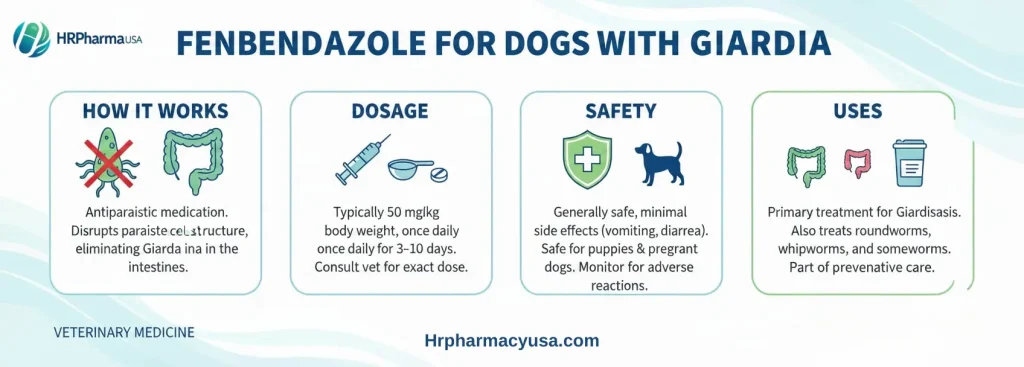
The Companion Animal Parasite Council lists fenbendazole at 50 milligrams per kilogram of body weight once daily for three to five days as an effective regimen for eliminating Giardia infection in dogs. The appropriate treatment plan should still be selected by a veterinarian because not every positive dog requires medication, and not every case of diarrhea is caused by Giardia.
Medication is only half of the battle. Fenbendazole may clear the organisms inside the dog, but it cannot stop the dog from immediately swallowing new cysts from the environment. Successful Giardia control, therefore, combines treatment with bathing, fecal removal, cleaning, and moisture control.
How Fenbendazole Works
Fenbendazole belongs to a group of antiparasitic medications called benzimidazoles. It disrupts essential cellular and energy-related processes in susceptible parasites.
You can picture Giardia as a tiny machine that depends on a functioning internal framework and reliable fuel supply. Fenbendazole interferes with those systems, making it difficult for the parasite to survive and reproduce normally.
Fenbendazole is also effective against several intestinal worms, which may make it useful when a dog has Giardia alongside susceptible roundworms, hookworms, or whipworms. However, it does not treat every parasite or every cause of diarrhea.
How Long Fenbendazole Takes to Work
Fenbendazole begins to act during treatment, but not all dogs improve at the same rate.
Some dogs develop firmer stool within a few days. Others need additional time for intestinal irritation to settle after the parasites have been controlled. A dog may also continue to have loose stool because of dietary sensitivity, secondary inflammation, another infection, or reinfection.
Owners should complete the prescribed course even if the dog appears to be improving after the first few doses. Stopping early may leave the treatment incomplete.
Similarly, a single loose bowel movement during treatment does not necessarily mean the medication has failed. Progress should be judged by the overall pattern: stool consistency, frequency, appetite, energy, hydration, and weight.
Fenbendazole Dosage for Dogs With Giardia
Fenbendazole dosing is based on body weight. It should not be estimated according to breed, age, packet size, or how large the dog appears.
A commonly referenced veterinary regimen for canine Giardia is:
50 mg of fenbendazole per kilogram of body weight, given orally once every 24 hours for three to five consecutive days.
This is general veterinary reference information, not an individualized prescription. A veterinarian may choose a different duration or treatment approach depending on the dog’s symptoms, test results, medical history, previous treatments, and local product approvals.
Never increase the dose or extend the treatment because diarrhea has not resolved immediately.
Understanding Fenbendazole Milligrams per Kilogram
To calculate the amount of active medication, the dog’s weight must first be converted into kilograms.
The basic formulas are:
Weight in pounds ÷ 2.2 = weight in kilograms
Weight in kilograms × prescribed mg/kg = milligrams per dose
For example, a 22-pound dog weighs approximately 10 kilograms. At 50 mg/kg, the calculated amount would be:
10 kg × 50 mg/kg = 500 mg per dose
This calculation determines the amount of active fenbendazole. It does not automatically tell you how many milliliters, tablets, scoops, or packets to administer.
Example Weight-Based Dose Calculations
The following examples show the mathematical amount produced by a 50 mg/kg calculation:
| Dog’s weight | Approximate kilograms | Calculated fenbendazole |
| 5.5 pounds | 2.5 kg | 125 mg |
| 11 pounds | 5 kg | 250 mg |
| 22 pounds | 10 kg | 500 mg |
| 44 pounds | 20 kg | 1,000 mg |
| 66 pounds | 30 kg | 1,500 mg |
These figures are educational examples. The volume or number of product units depends entirely on the concentration.
For instance, a 100 mg/mL liquid and a 50 mg/mL liquid would require different volumes for the same dog. Confusing the two could result in a major dosing error.
Looking for fenbendazole options?
Fenbendazole products are available in different strengths and formulations, including Fenbendazole 444 mg.
However, a 444 mg tablet is not a universal dose for every dog. Giardia treatment is calculated according to body weight, and the tablet may need to be divided or replaced with a more suitable veterinary formulation.
Always confirm the product strength and dosing plan with a veterinarian before giving fenbendazole to a dog or puppy. Veterinary guidance commonly references weight-based treatment rather than a fixed tablet amount.
How Much Fenbendazole Puppies May Receive
Puppy dosing is also calculated according to current body weight. Puppies grow quickly, so an old weight from several weeks ago may no longer be accurate.
The current US Panacur C canine label states that the product can be used in puppies six weeks of age or older according to its labeled worm-treatment directions. Giardia treatment is a separate extra-label consideration and should be supervised by a veterinarian.
Very young puppies with diarrhea should be evaluated promptly. Giardia may be present, but conditions such as parvovirus, coccidia, heavy worm infections, dietary problems, or bacterial illness can produce similar symptoms.
With a tiny puppy, a small measuring mistake represents a larger percentage of the intended dose. Accurate weighing and careful measurement are essential.
Fenbendazole Dosing Schedule for Giardia
A veterinarian-directed schedule generally involves:
- One accurately measured dose every 24 hours
- Treatment on consecutive days
- Completion of the entire prescribed course
- Administration with a small amount of food
- Environmental cleaning during treatment
- Follow-up when signs persist or return
Try to administer each dose at approximately the same time daily. Consistency makes it easier to remember doses and maintain the prescribed interval.
When a dose is missed, do not automatically double the next one. Contact the veterinary clinic when you are unsure whether to give the missed amount or continue with the next scheduled dose.
How to Give Fenbendazole to Dogs
Many canine fenbendazole products are powders or granules designed to be mixed with food. Medicated food must be consumed in full for the dog to receive the intended amount.
Mix the medication into a small portion of food first rather than a full meal. Once the dog eats the medicated portion, provide the rest of the meal.
This approach prevents the dog from eating half of a large bowl and leaving an unknown amount of medication behind.
Can Fenbendazole Be Given on an Empty Stomach?
Common directions for canine granule formulations recommend mixing fenbendazole with food. Following the directions supplied with the specific veterinary product is the safest approach.
Food can make granules easier to administer and helps ensure the medication is swallowed rather than scattered around the bowl or floor.
Compounded liquids, tablets, or capsules may come with different instructions. Follow the veterinarian’s or veterinary pharmacist’s directions for the exact formulation provided.
How to Hide Fenbendazole in Dog Food
Fenbendazole can be mixed into a small amount of a food the dog enjoys, such as:
- Canned dog food
- Moistened kibble
- A veterinary gastrointestinal diet
- A small amount of plain cooked chicken
- A dog-safe pill pocket for capsules or tablets
Avoid hiding medication in foods containing onion, garlic, chocolate, raisins, grapes, macadamia nuts, xylitol, or excessive fat.
Use only enough food to disguise the medication. A small medicated bite is easier to monitor than a large bowl.
What to Do When a Dog Refuses the Medicated Food
Begin with a small unmedicated bite. Offer the medicated portion next, followed by another plain bite.
Feed dogs separately in multi-pet homes, so one animal does not receive another dog’s medicine.
When the dog eats only part of the dose, do not guess how much remains. Likewise, do not immediately repeat the full dose after vomiting, as some medication may already have been absorbed. Contact the prescribing clinic for instructions.
Liquid vs. Granule or Tablet Fenbendazole
Each formulation has advantages and potential problems.
Granules work well for dogs that reliably finish their food. However, powder left at the bottom of the bowl can lead to an incomplete dose.
Liquid fenbendazole may be easier to measure for small puppies, but the concentration must be confirmed. Shake compounded suspensions when directed because the active ingredient may settle.
Tablets or capsules are convenient for dogs that swallow pills easily. Do not crush or split them unless the veterinarian or pharmacist confirms that doing so is appropriate.
Never substitute livestock, horse, or other species-specific products based solely on the ingredient name. Concentrations, excipients, measuring systems, and dosing instructions may differ significantly.
Fenbendazole Safety for Dogs and Puppies
Fenbendazole is generally well tolerated when used appropriately. In clinical studies cited in product information, vomiting possibly related to treatment occurred in three of 240 dogs.
However, “generally safe” does not mean “safe at any amount for any duration.” Problems can occur when owners use the wrong concentration, miscalculate the dog’s weight, combine medications without guidance, or continue treatment longer than directed.
Common Fenbendazole Side Effects
Possible side effects include:
- Vomiting
- Temporary loss of appetite
- Drooling due to an unpleasant taste
- Soft stool
- Diarrhea
- Mild digestive discomfort
It can be difficult to separate medication effects from Giardia symptoms because both may involve vomiting or diarrhea.
Contact the veterinarian when vomiting continues, the dog refuses food, diarrhea becomes severe, or the animal appears weak or dehydrated.
Can Dogs Have an Allergic Reaction to Fenbendazole?
Allergic reactions are possible with almost any medication, although severe reactions to fenbendazole are not considered common.
Warning signs include:
- Facial or muzzle swelling
- Hives
- Sudden intense itching
- Difficulty breathing
- Pale or bluish gums
- Weakness
- Collapse
Breathing difficulty, collapse, or rapidly developing facial swelling requires emergency veterinary care. Do not give another dose until a veterinarian has assessed the situation.
Fenbendazole Toxicity and Extended Treatment
Owners should not extend or repeatedly restart fenbendazole without veterinary direction.
The FDA has reported cases of bone-marrow hypoplasia and pancytopenia in dogs that received fenbendazole for longer than the labeled duration. The reports involved extra-label courses and do not show that every extended treatment will cause these problems. They do, however, demonstrate why prolonged use should be medically supervised.
Pancytopenia involves reduced levels of multiple blood cell types. Possible signs include:
- Unusual tiredness
- Pale gums
- Fever
- Unexplained bruising
- Bleeding
- Weakness
- Repeated infections
Veterinary Giardia guidance includes three- to five-day fenbendazole regimens, while many US canine worm products carry a labeled three-day treatment course. The veterinarian must balance the recommended Giardia protocol against the individual animal’s risks and health status.
Fenbendazole Drug Interactions
Product information states that fenbendazole has been administered in canine clinical trials alongside various antibiotics, steroids, anesthetics, tranquilizers, vitamins, and minerals, with no known incompatibilities reported at that time.
That does not mean every possible combination has been studied. Tell the veterinarian about all medications and supplements the dog receives, including:
- Heartworm preventives
- Flea and tick products
- Antibiotics
- Steroids
- Seizure medications
- Herbal products
- Vitamins
- Other dewormers
This is particularly important for puppies, pregnant dogs, dogs with liver disease, and animals receiving several medications.
Fenbendazole vs. Metronidazole for Giardia
Fenbendazole and metronidazole may both be used to treat Giardia in dogs, but they work differently.
Fenbendazole is an antiparasitic medication that also treats several types of intestinal worms. Metronidazole has antiprotozoal and antibacterial activity. Veterinary guidance includes both medications as potential treatment options.
The best choice depends on the dog’s symptoms, age, previous treatment, other parasites, intestinal health, and veterinary assessment.
One medication is not automatically stronger or better. Combining them without veterinary guidance may increase the risk of side effects and fail to address environmental reinfection, incorrect dosing, or an inaccurate diagnosis.
Fenbendazole for Mixed Parasite Infections
Dogs can carry more than one intestinal parasite at the same time. Fenbendazole may therefore be useful when testing reveals Giardia alongside susceptible worms.
Common canine fenbendazole products may treat certain roundworms, hookworms, whipworms, and Taenia tapeworms. They do not eliminate every tapeworm species or every protozoan parasite.
For example, rice-like segments around a dog’s rear end may indicate a tapeworm linked to fleas. That situation may require a different medication and effective flea control.
Fecal testing helps identify which parasites are present, so treatment can target the real problem rather than relying on guesswork.
Signs Fenbendazole Is Working
Possible signs of improvement include:
- Firmer stool
- Less mucus
- Fewer urgent bowel movements
- Improved appetite
- Increased energy
- Normal hydration
- Reduced abdominal discomfort
- Healthy weight gain in puppies
A simple daily record can help. Note the medication time, stool consistency, appetite, vomiting, water intake, and energy level.
Improved stool does not always prove that every Giardia organism has disappeared. Similarly, persistent soft stool does not always prove treatment failure. The intestinal lining may still be recovering, or another digestive condition may be present.
Why Giardia Treatment Sometimes Fails
Recurring diarrhea after fenbendazole can feel like the parasite is unbeatable. In many cases, however, reinfection or another practical problem is responsible.
Possible causes include:
- A partially eaten dose
- An inaccurate body weight
- Incorrect liquid concentration
- Missed treatment days
- Vomiting after administration
- Re-exposure to contaminated feces
- Giardia cysts remaining on the coat
- Untreated animals in the home
- Another parasite or digestive disorder
- Immune-system problems
CAPC also notes that reinfection, inadequate drug levels, immunosuppression, resistance, and parasite sequestration may contribute to persistent cases.
Reinfection, Incorrect Dosing, and Other Causes
Reinfection is often more likely than true drug resistance.
A dog may finish treatment, lick cysts from its fur, and become exposed again within a short period. It is like washing muddy shoes and then immediately stepping back into the same puddle.
Repeating fenbendazole without reassessment can delay the diagnosis of another problem and unnecessarily extend medication exposure. Persistent or recurring symptoms should prompt a conversation with the veterinarian.
Preventing Giardia Reinfection
Successful treatment requires environmental control.
Pick up feces immediately, wash hands afterward, and prevent the dog from drinking from puddles or communal bowls. Bathing may help remove cysts from the coat, particularly around the rear legs and tail.
Clean food bowls, water bowls, toys, crates, and washable bedding regularly. Allow cleaned areas to dry completely because Giardia thrives in damp environments.
Cleaning Bedding, Bowls, Floors, and Toys
Before disinfecting a surface, remove all visible dirt and fecal material. Organic debris can reduce the effectiveness of cleaning products.
Wash bedding using the hottest temperature safe for the material. Clean bowls with hot water and an appropriate detergent. Steam cleaning may help on suitable hard surfaces, carpets, or upholstery.
Never apply household disinfectants directly to the dog, and never mix cleaning chemicals. Combinations such as bleach and ammonia can create dangerous fumes.
Managing Giardia in Yards and Outdoor Areas
Grass and soil are difficult to disinfect safely. Pouring strong chemicals across a yard can harm animals, plants, and people without reliably eliminating Giardia.
Focus on practical measures:
- Remove feces immediately.
- Reduce standing water.
- Restrict access to muddy areas.
- Keep outdoor bowls clean.
- Avoid crowded dog areas during treatment.
- Encourage sunlight and drying where possible.
Total environmental elimination may be unrealistic, but reducing the number of cysts lowers the chance of immediate reinfection.
How to Store Fenbendazole
Store medication according to the package or pharmacy label.
Common Panacur C granules are labeled for storage at a controlled room temperature of approximately 68–77°F (20–25 °C). Keep the product dry, inside its original packaging, and away from children and animals.
Avoid storing medication in hot vehicles, humid bathrooms, or direct sunlight.
Compounded liquids may require refrigeration, shaking, or disposal after a specific date. The instructions for a granule product should not be automatically applied to a liquid formulation.
When to Call a Veterinarian
Contact a veterinarian promptly when:
- A young puppy has repeated diarrhea.
- The dog stops eating or drinking.
- Vomiting prevents water from staying down.
- Stool contains blood or appears black and tarry.
- The dog seems weak, painful, or dehydrated.
- A major dosing error may have occurred.
- The wrong product concentration was used.
- Facial swelling, hives, or breathing difficulty develops.
- Pale gums, bruising, bleeding, or fever appear.
- Symptoms worsen during treatment.
- Diarrhea continues or returns after treatment.
- Multiple pets in the home become ill.
A Giardia test result should never replace a complete assessment of a seriously sick dog. Persistent symptoms may require additional fecal tests, blood tests, imaging, dietary changes, or investigation for another disease.
Conclusion
Fenbendazole can be an effective treatment for Giardia in dogs and puppies when used as part of a veterinarian-directed plan. A commonly referenced regimen is 50 mg/kg once daily for three to five days, but the correct amount and duration depend on the dog’s accurate weight, health, medication formulation, and local product regulations.
Owners should never guess the concentration, double missed doses, or extend treatment because diarrhea has not disappeared immediately. Medication works best when combined with bathing, immediate removal of feces, clean bowls and bedding, dry living areas, and protection from contaminated water.
Most importantly, remember that diarrhea is a symptom rather than a diagnosis. When a puppy is weak, dehydrated, vomiting, passing blood, or failing to improve, veterinary evaluation matters more than another round of medication.
FAQs
Can I Buy Fenbendazole Over the Counter for My Dog’s Giardia?
Some canine fenbendazole products are available without a prescription in the United States, but their approved labels cover specific intestinal worms rather than Giardia. Giardia treatment may be an extra-label use, so veterinary guidance is recommended before selecting the dose and duration.
Can I Give Fenbendazole to a Puppy?
Some canine fenbendazole products are labeled for puppies six weeks of age and older when used according to their approved directions. A puppy with diarrhea still needs veterinary assessment because Giardia is only one of several possible causes.
Should Fenbendazole Be Given With Food?
Common canine granules should be mixed with a small amount of food, and the entire medicated portion must be consumed. Instructions may differ for compounded liquids, tablets, or capsules.
Should I Repeat Fenbendazole if My Dog Still Has Diarrhea?
Do not repeat or extend treatment without speaking to a veterinarian. Persistent diarrhea may result from reinfection, incomplete dosing, another parasite, intestinal inflammation, or an unrelated disease. Extended extra-label treatment has also been associated with serious blood-cell disorders in reported cases.
Can a Dog Catch Giardia Again After Treatment?
Yes. Fenbendazole does not create immunity. A treated dog can swallow new cysts from contaminated fur, stool, water, bedding, soil, bowls, or other animals. Cleaning and environmental control are therefore essential parts of treatment.