
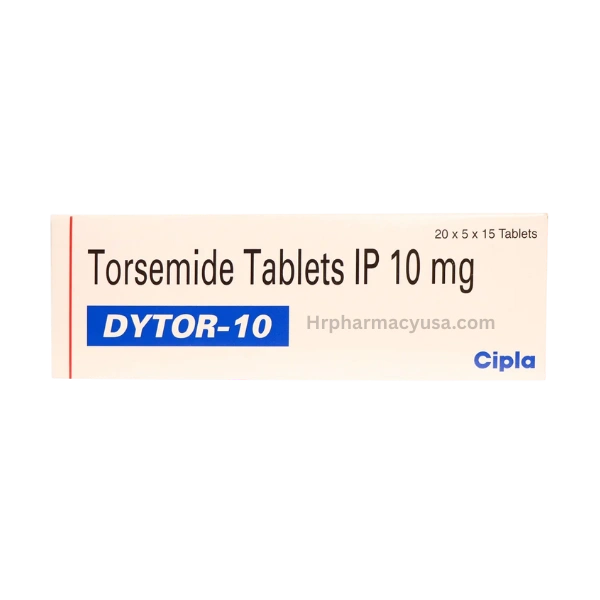
Dytor 10 mg (Torasemide)
Dytor 10 mg (Torasemide) is a loop diuretic often called a water pill. It helps reduce swelling and fluid buildup caused by conditions like heart failure, kidney problems, or liver disease, and it can also help manage high blood pressure. It works by helping your body get rid of extra water and salt through urine. If your doctor has recommended torasemide, Dytor 10 mg offers a steady, reliable option for daily use.
| Active Ingredient: | Torasemide |
|---|---|
| Indication: | High blood pressure, Oedema |
| Manufacturer: | Cipla Limited |
| Packaging: | 15 tablets in 1 strip, 10 tablets in 1 strip |
| Strength: | 10mg |
| Delivery Time: | 6 To 15 days |
Dytor 10 mg (Torasemide)
| Variant | Price | Units | Quantity | Add to Cart |
|---|---|---|---|---|
| 30 Tablet/s | $23.00 | $0.38 /Tablet | ||
| 60 Tablet/s | $31.00 | $0.34 /Tablet | ||
| 90 Tablet/s | $40.00 | $0.33 /Tablet |
About Dytor 10 mg (Torasemide)
Dytor 10 mg (Torasemide) is a trusted loop diuretic used to reduce fluid retention and swelling, and to help manage high blood pressure when prescribed.
If you notice puffy legs, sudden weight gain from fluid, or shortness of breath linked to fluid buildup, your healthcare provider may choose torasemide to help you shed the extra water.
Many people call it a water pill, but it does more than make you pee. It helps your heart and kidneys handle fluid more efficiently.
What it helps with
Edema from heart failure, kidney disease, or cirrhosis
High blood pressure, sometimes alongside other blood pressure medicines
Fluid-related symptoms like ankle swelling and bloating
How it works
Torasemide tells your kidneys to release more salt and water. As your body gets rid of that extra fluid, swelling goes down, and your heart has less workload.
You may notice you urinate more often, especially during the first few hours after taking it.
How to take it
Follow your doctor’s instructions. Many people take torasemide in the morning to avoid nighttime bathroom trips. Try to take it at the same time each day with a glass of water.
Do not change your dose on your own. If you miss a dose, take it when you remember, unless it is close to the next dose. If it is late in the day, it is usually better to skip so you are not up all night. When in doubt, ask your prescriber.
What to expect
More frequent urination within 1 to 2 hours of dosing
Gradual relief of swelling over days to weeks
Possible drop in blood pressure, which is the point if you are using it for hypertension
Common side effects and safety
Because it moves water and salt, torasemide can also lower potassium, sodium, or magnesium. That can cause cramps, weakness, dizziness, dry mouth, or a fast heartbeat. Dehydration and low blood pressure can happen if you lose too much fluid.
Your provider may check your blood tests from time to time and might suggest a potassium-rich diet or supplements if needed. If you feel faint, very thirsty, confused, or notice a pounding or irregular heartbeat, get medical help.
Let your provider know if you have
Kidney concerns or very low urine output
Severe liver disease
A history of gout or high uric acid
Diabetes or issues with electrolytes
A sulfa allergy. Torasemide is a sulfonamide derivative, and most people with sulfa allergies do fine, but it is worth mentioning.
Drug interactions to keep on the radar
NSAIDs like ibuprofen may reduce the diuretic effect
Lithium levels can rise and become unsafe
Other blood pressure meds can increase the chance of low blood pressure
Digoxin problems are more likely if potassium levels get too low
Corticosteroids or other diuretics can increase potassium loss
Alcohol can worsen dizziness
Tips for daily life
- Take it in the morning.
- Weigh yourself a few times a week if your provider asked you to track fluid changes.
- Stand up slowly to avoid lightheadedness.
- Drink fluids sensibly. You do not want to be dehydrated, but this is not a chug-water kind of medicine.
- Keep a simple log of doses and how you feel. It helps at checkups
Who should not use it
If your doctor has told you that you have anuria, which means no urine output, this medicine is not appropriate. Also, avoid it if you have a known serious reaction to torasemide.
Pregnancy and breastfeeding need a careful conversation with your clinician to weigh risks and benefits.
Storage and handling
Store at room temperature in the original blister or bottle. Keep it dry, away from heat and sunlight, and out of reach of children and pets. Do not use tablets that are damaged or expired.
Available Strengths
Torasemide tablets are commonly available in:
- Dytor 5 mg (Torasemide)
- Dytor 10 mg (Torasemide)
- Dytor 20 mg (Torasemide)
- Dytor 40 mg (Torasemide)
- Dytor 100 mg (Torasemide)
Your prescriber will choose the strength and schedule based on your condition and response. Do not change strengths without guidance.
FAQs About Dytor 10 mg
| size | 30 Tablet/s, 60 Tablet/s, 90 Tablet/s |
|---|
Please sign in to My Account to leave a review.


Reviews
There are no reviews yet.