
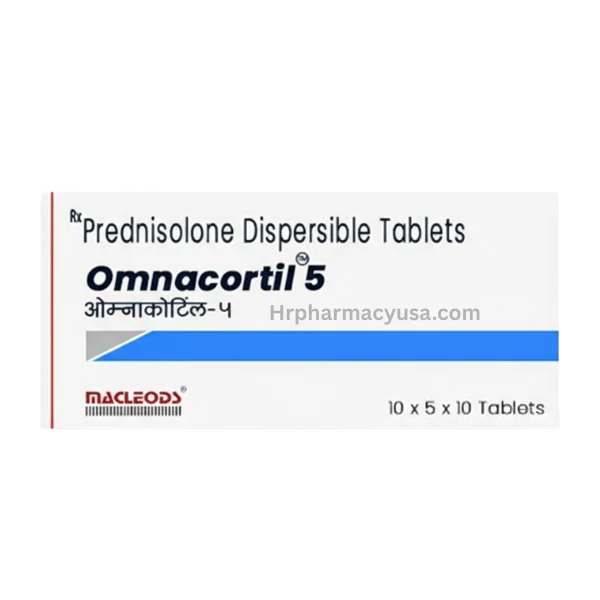
Omnacortil 5 Mg (Prednisolone)
Omnacortil 5 mg is a low-dose corticosteroid containing Prednisolone, commonly prescribed for mild to moderate inflammatory and allergic conditions, including asthma, arthritis, and skin disorders. It helps by reducing inflammation and regulating the immune response.
| Active Ingredient | Prednisolone |
|---|---|
| Manufacturer | Macleods Pharmaceuticals Pvt Ltd |
| Packaging | 10 tablets in 1 strip |
| Strength | 5 Mg |
| Delivery Time | 6 To 15 days |
Omnacortil 5 Mg (Prednisolone)
| Variant | Price | Units | Quantity | Add to Cart |
|---|---|---|---|---|
| 90 Tablet/s | $14.00 | $0.16 | ||
| 120 Tablet/s | $19.00 | $0.16 | ||
| 150 Tablet/s | $24.00 | $0.16 | ||
| 300 Tablet/s | $29.00 | $0.10 |
Omnacortil 5 Mg (Prednisolone): Your Guide to Taming Inflammation
Ever feel like your body’s throwing a wild party you didn’t ask for? Inflammation shows up – pain, swelling, stiffness – and just won’t leave. It’s exhausting, right? Sometimes, your own defenses get a bit overzealous. That’s when your doctor might pull out a tool like Omnacortil 5 Mg. Think of it less like a magic bullet, more like a really effective mediator stepping in to calm things down. Let’s talk about what this little tablet actually is and how it works, no fancy jargon required.
What’s in This Little Pill Anyway?
Alright, let’s get straight to it. Omnacortil 5 Mg contains 5 milligrams of prednisolone. Okay, “prednisolone” sounds like something from a sci-fi movie, but it’s actually pretty familiar to your body. It’s a corticosteroid. Now, I know “steroid” makes people think of bodybuilders, but forget that. These are totally different. Prednisolone is basically a lab-made version of a hormone your body naturally makes called cortisol. Cortisol? Yeah, that’s your body’s main stress hormone, but it’s also super important for controlling inflammation, managing your energy, and keeping your immune system in check. So, Omnacortil is like giving your body a top-up of its own natural calming agent when things get out of hand.
How Does This Stuff Actually Work? (Simple Version)
Imagine inflammation is like a fire alarm that won’t shut off. Your body sets it off to fight injury or germs – redness, heat, swelling, pain, that’s the alarm. Usually, that’s good! But sometimes, the alarm gets stuck. It keeps blaring even when there’s no real danger, or it starts attacking your own house (like in autoimmune stuff). That’s when it becomes a problem.
Prednisolone, the star player in Omnacortil 5 Mg, is like the super-competent firefighter who finally shows up. It gets inside your cells and basically:
- Turns Down the Volume: It tells those overexcited immune cells and inflammatory chemicals to chill. Less of those troublemakers means less swelling, redness, and pain. Simple as that.
- Hits the Brakes on Overreaction: If your immune system is mistakenly attacking your own joints, skin, or guts (like in rheumatoid arthritis or lupus), prednisolone helps pump the brakes. It calms the overzealous immune response.
- Fills in When Needed: For folks whose adrenal glands (the cortisol factories) aren’t working right (Addison’s disease), prednisolone steps in as a crucial replacement, keeping essential body functions ticking over.
So yeah, Omnacortil 5 Mg isn’t magic. It’s science mimicking your own body to fight harmful inflammation and quiet an immune system that’s gone rogue.
Why Would My Doc Prescribe This? (The Usual Suspects)
This 5 mg tablet is surprisingly handy. Doctors use it for a whole bunch of stuff where inflammation or immune chaos is the root problem. Common reasons include:
- Joint & Muscle Pain: Rheumatoid arthritis, osteoarthritis flares, gout, bursitis, tendonitis – basically, anything making your joints or soft tissues angry and swollen.
- Allergies Gone Wild: Severe hay fever that won’t quit, nasty eczema or contact dermatitis, even serious asthma attacks where airways get tight and inflamed.
- Autoimmune Conditions: When your body attacks itself – think lupus (SLE), inflammatory bowel disease (Crohn’s, ulcerative colitis), multiple sclerosis (MS), myasthenia gravis.
- Skin Troubles: Stubborn psoriasis, severe blistering diseases (pemphigus), or other skin inflammation that laughs at other treatments.
- Lung Issues: Beyond asthma, it helps with bad COPD flares or sarcoidosis messing with your lungs.
- Eye Inflammation: Conditions like uveitis or optic neuritis.
- Blood Problems: Certain types of anemia or low platelets (thrombocytopenia).
- Cancer Care Backup: Sometimes used with chemo to ease inflammation, manage nausea, or help fight specific cancers (like lymphoma).
- Hormone Help: Yep, for that adrenal insufficiency (Addison’s) we mentioned.
The point is, your doctor isn’t just handing this out. They’ve weighed the pros and cons and believe Omnacortil 5 Mg offers the best shot at getting your condition under control. The 5 mg dose is often used for milder cases, as a starting point, or for long-term management at the lowest effective dose possible.
What Good Stuff Might Happen? (Possible Benefits)
If Omnacortil 5 Mg is the right fit for what’s ailing you, you might start noticing some welcome changes:
- Ouch, Less Pain & Swelling: This is usually the first thing people notice, especially with joint issues. Suddenly, moving doesn’t feel like torture.
- Goodbye Morning Stiffness: That creaky feeling when you wake up with arthritis? It can ease up a lot.
- Getting Around Easier: Less pain and swelling usually means you can actually move more freely again.
- Calmer Skin: For skin inflammation, the redness, itch, and flaking can dial down significantly.
- Breathing Gets Easier: If inflammation was tightening your airways (asthma, COPD), this helps open them up. Breathing = less struggle.
- A Bit More Pep: Chronic inflammation is incredibly draining. Tamping it down can give you a real energy boost.
- Flare-Ups Tamed: It can be great at bringing a sudden, severe flare of a chronic condition back under control pretty quickly.
How Do I Actually Take This? (Crucial Instructions!)
Seriously, pay attention here. This isn’t like taking a vitamin. Following your doctor’s instructions exactly is non-negotiable. Here’s the basic rundown:
- Dosing: Yeah, it’s 5 mg per tablet, but your doc will tell you how many to take and when. Once a day? Split doses? Every other day? Never mess with your dose without talking to them first.
- Timing: Most folks take it in the morning, with breakfast or right after. Why? It copies your body’s natural cortisol cycle (highest in the AM). Plus, taking it earlier might mess with your sleep less at night.
- With Food? Absolutely! Always take it with food or milk. This is super important. It coats your stomach and lowers the chance of irritation or worse, ulcers.
- Swallow It Whole: Don’t crush, chew, or break the tablet unless your doc or pharmacist specifically says it’s okay. Some have special coatings.
- How Long? This totally depends. Could be just a few days (for a nasty allergy) or months/years (for chronic autoimmune stuff). HUGE WARNING: Never, ever stop taking this suddenly! Seriously. Your body might have stopped making its own cortisol. Stopping cold turkey can make you really sick – fatigue, body aches, dizziness, nausea, even a dangerous adrenal crisis. Your doctor will give you a plan to slowly lower the dose (taper off) when it’s time to stop.
What About the Downside? (Side Effects – Let’s Be Honest)
Look, any powerful medicine has potential downsides. Omnacortil 5 Mg is no exception. Not everyone gets side effects, and they often depend on the dose and how long you take it. The 5 mg dose is generally lower risk than bigger doses, but you still need to know what to watch for.
Common Ones (More likely with short-term use or lower doses):
- Tummy Trouble: Indigestion, heartburn, feeling a bit queasy. Taking with food really helps here.
- Mood Swings: Feeling a bit wired, anxious, or maybe a bit blue. Trouble sleeping can happen too.
- Hungry Much? You might notice your appetite kicks up a notch. This can sometimes lead to…
- Puffiness: Some fluid retention, maybe a bit of a puffy face (“moon face”) or ankles, or slight weight gain.
- Headache: Some people get headaches.
- Dizzy Spells: Feeling lightheaded now and then.
Stuff More Likely with Long-Term Use or Higher Doses (Still possible at 5 mg, especially long-term):
- Skin Changes: Skin might get thinner, bruise super easily, or tear more easily.
- Slow Healing: Little cuts and scrapes might take longer to close up.
- Muscle Weakness: Feeling weaker in your arms or legs.
- Eye Stuff: Higher chance of cataracts or glaucoma with long-term use. Regular eye checks are smart.
- Bones Getting Thinner (Osteoporosis): Long-term steroid use can weaken bones, raising fracture risk. Your doc might suggest calcium/vitamin D or bone scans.
- Blood Sugar Rising: Can bump up your blood sugar levels. Big deal if you have diabetes – monitoring might be needed.
- Blood Pressure Creeping Up: Can cause or make high blood pressure worse.
- Adrenal Suppression: Your body might slow or stop making its own cortisol. This is why tapering off slowly is absolutely critical.
- Catching Bugs Easier: Because it dials down your immune system, you might pick up infections more easily or have a harder time fighting them off.
Serious Stuff (Rare, but get help FAST if you notice):
- Really bad stomach pain, black/tarry stools, throwing up blood (could mean stomach bleeding).
- Severe allergic reaction (rash, hives, itching, hard time breathing, face/throat swelling).
- Vision changes, severe eye pain.
- Major mood shifts (deep depression, confusion, seeing things).
- Signs of infection (fever, chills, sore throat that won’t quit, cough).
- Severe muscle pain or weakness.
Real Talk on Side Effects: Be open with your doctor. They prescribed this because they believe the help it gives you is worth the potential risks for your situation. Tell them about any side effects, especially if they bother you or stick around. Long-term use usually means regular check-ups and blood tests to keep an eye on things.
Important Stuff to Tell Your Doc Before You Start
Seriously, don’t hold back. Before you pop the first Omnacortil 5 Mg, and while you’re taking it, keep your doctor in the loop about:
- Your Health History: Especially if you’ve had:
- Stomach ulcers or digestive issues.
- Heart problems, high blood pressure.
- Diabetes (or it runs in your family).
- Liver or kidney disease.
- Thyroid problems.
- Osteoporosis or risks (family history, smoking, low calcium).
- Any infections (current or recent, like TB, fungal stuff).
- Mental health stuff (depression, anxiety, psychosis).
- Eye problems (glaucoma, cataracts).
- Seizures (epilepsy).
- Myasthenia gravis.
- Allergies: Are you allergic to prednisolone, other steroids, or any other meds?
- Other Meds You Take: THIS IS HUGE. Steroids play with lots of other drugs. Tell your doc about EVERYTHING – prescriptions, over-the-counter stuff (like painkillers – especially NSAIDs like ibuprofen or naproxen, which up stomach bleed risk), vitamins, supplements, herbal junk. Even vaccines! Live vaccines might not work well or could be risky.
- Pregnancy/Breastfeeding: If you’re pregnant, might be, or are breastfeeding, you must talk this through. Steroids can reach the baby. Your doctor will carefully weigh the risks and benefits.
- Surgery/Dental Work: If you need any procedure, tell them you’re on steroids. You might need extra doses around surgery time.
- Avoiding Germs: Be extra careful around sick people. Wash your hands a lot. Maybe skip big crowds during flu season. If you think you’ve been near chickenpox or measles, call your doc ASAP – these can be nasty for people on steroids.
- Alcohol: Drinking booze while on steroids can really irritate your stomach. Best to limit it or skip it altogether.
Got Questions? (FAQ)
Other Stuff Your Doc Might Talk About
Omnacortil 5 Mg is one option, but depending on your situation, your doctor might think about others:
- Different Omnacortil Strengths: Prednisolone comes in other doses (2.5 mg, 10 mg, 20 mg, 40 mg). Your doc might use a different strength to start, handle a bad flare, or help you taper off.
- Other Prednisolone Brands: There are other brands out there (e.g., Prednisone – though your body has to convert that one; Deltacortril, Winpred). Same active ingredient, but maybe different fillers or coatings.
- Deflazacort (e.g., Calcort, Defza): Another steroid type. Some studies say it might cause slightly less bone thinning or weight gain than prednisolone, but it’s not for everyone and can cost more. Your doc would decide if it’s a better match.
- Methylprednisolone (e.g., Medrol): Another steroid used similarly. Comes in pills and shots. Might be picked for specific conditions or if prednisolone doesn’t agree with you.
- Steroid Creams/Ointments: If your inflammation is mostly skin-deep (eczema, psoriasis), your doc might suggest a steroid cream instead of or with pills. Puts the medicine right where it’s needed with less body-wide side effects.
- Inhaled/Nasal Steroids: For asthma or hay fever, inhaled (like beclomethasone, fluticasone) or nasal spray steroids are often top choice. They act directly in the lungs/nose with very little getting into the rest of you.
- NSAIDs (like Ibuprofen, Naproxen): For milder inflammation and pain (osteoarthritis, sprains), doctors often try these first. They work differently than steroids and have their own side effects (mostly stomach/kidney). Sometimes used with low-dose steroids, but that bumps up stomach bleed risk and needs watching.
| size | 120 Tablet/s, 150 Tablet/s, 300 Tablet/s, 90 Tablet/s |
|---|
Please sign in to My Account to leave a review.
Related Products
Reviews
There are no reviews yet.