
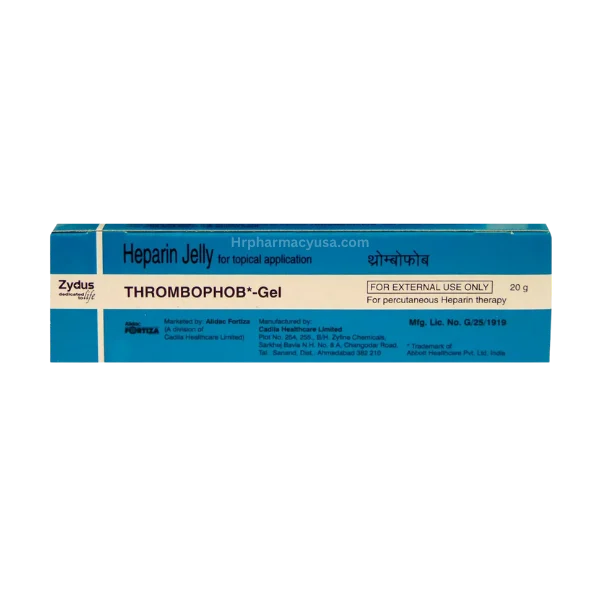
Thrombophob Gel (Heparin Sodium)
| Active Ingredient: | Heparin Sodium |
|---|---|
| Indication: | Thrombophlebitis, Piles, Anal fissure |
| Manufacturer: | Zydus Cadila Pharma |
| Packaging: | 20 gm in 1 tube |
| Delivery Time: | 6 To 15 days |
Thrombophob Gel (Heparin Sodium)
| Variant | Price | Units | Quantity | Add to Cart |
|---|---|---|---|---|
| 3 Gel/s | $25.00 | $8.33 /Gel | ||
| 2 Gel | $18.00 | $9 /Gel | ||
| 4 Gel/s | $33.00 | $8.25 /Gel | ||
| 5 Gel/s | $40.00 | $8 /Gel | ||
| 6 Gel/s | $45.00 | $7.5 /Gel |
Shop Thrombophob Gel 20gm in USA
Thrombophob Gel (Heparin Sodium) is a topical medication people often reach for when they are dealing with bruising, localized swelling, or tenderness along a superficial vein.
It’s not a “pain balm” in the typical sense. The main goal is to support recovery in areas where blood has pooled under the skin (like bruises) or where a surface vein feels irritated and firm.
This type of gel is commonly used for concerns such as:
- Bruises from bumps, sports, or minor injuries
- Local swelling around a contusion
- Discomfort after injections or IV cannulas (where the skin and small veins can get irritated)
- Superficial thrombophlebitis symptoms (a tender, inflamed superficial vein), when a clinician has already ruled out more serious vein problems
How it works
Heparin sodium is an anticoagulant ingredient. In a gel form, it’s intended to work locally at the site of application. The idea is to help the body clear trapped blood under the skin and calm local vein irritation.
Results are not instant. With bruises, many people notice gradual improvement over several days as the discoloration fades and the area feels less tight.
Important note: topical heparin is not the same as prescription blood thinners taken by mouth or injection. It is also not used to treat deep vein thrombosis (DVT). If you have leg swelling, warmth, shortness of breath, chest pain, or sudden one-sided pain, it needs urgent medical evaluation.
How to apply Thrombophob Gel
Follow your prescriber’s directions or the package label. In many cases, people apply a thin layer to the affected area and gently massage it in.
General tips that usually apply to heparin gels:
- Apply to clean, dry, unbroken skin
- Use only on the affected area
- Wash your hands after applying (unless your hands are the treated area)
- Avoid contact with the eyes, mouth, and other mucous membranes
What to avoid
To reduce irritation and prevent complications:
- Do not apply to open cuts, raw skin, active bleeding, or infected areas
- Avoid covering tightly with airtight (occlusive) bandages unless a clinician advises it
- Avoid using it at the same time as other strong topical products on the same spot (like exfoliating acids), unless you know your skin tolerates it
Side effects you may notice
Most people tolerate topical heparin gels well, but skin reactions can happen. Possible side effects include:
- Mild burning, itching, or redness at the application site
- Rash or increased sensitivity in the treated area
Stop using it and seek medical advice if you develop significant irritation, hives, or swelling that appears to be an allergic reaction.
Precautions and medication considerations
If you have a history of bleeding disorders, low platelets related to heparin (including suspected heparin-induced thrombocytopenia), or you bruise very easily, it’s worth checking with a clinician before using a heparin-containing topical.
Also, consider getting medical advice if you are using prescription anticoagulants or antiplatelet medicines. Topical use is localized, but it’s still smart to confirm what’s appropriate for your situation.
Available strengths and pack sizes
Thrombophob Gel (Heparin Sodium) is typically sold as a topical gel in tubes, and you may see different pack sizes depending on the supplier and inventory. Common tube sizes on the market include 20 g, 30 g, 40 g, and 50 g.
The heparin concentration can differ by brand or country of manufacture, so it’s best to confirm the exact strength on the product label (for example, IU per gram or a percentage).
Substitute with comparable products
If Thrombophob Gel is not available, pharmacists often look for products with a similar purpose. Options may include:
- Heparin sodium gels sold under other brand names (label may show a similar heparin IU strength)
- Heparinoid (mucopolysaccharide polysulfate) creams or gels used for bruising and vein irritation support
- Lioton 1000 gel (heparin sodium) in markets where it’s available
- Hirudoid (heparinoid) in markets where it’s available
Non-heparin topical options (used for symptom relief rather than the same mechanism) may include arnica-based bruise gels or topical anti-inflammatory gels. These are not direct substitutes for heparin, so it’s reasonable to ask a pharmacist which option best matches your goal.
FAQs
1. Is Thrombophob Gel over-the-counter or prescription?
It depends on local regulations and the specific product listing. Some heparin gels are sold without a prescription, while others may be pharmacy-dispensed.
2. Can I use it for a black eye or on my face?
Facial skin is more sensitive, and the product must be kept away from the eyes and mucous membranes. It’s safer to ask a clinician before using it on the face.
3. Can Thrombophob Gel stain clothes or sheets?
Some gels can leave residue until fully absorbed. Let it dry before dressing, and consider using older clothing if you are applying a thicker layer.
4. Can I use it with heat or ice packs?
Many people use cold packs early to reduce swelling and improve comfort. If you combine approaches, avoid extreme temperatures in the same area and do not apply the gel under a heating pad unless advised.
5. What if I forget an application?
Just apply when you remember, then continue your normal schedule. Do not double the amount to “make up” for the missed application.
| size | 2 Gel, 3 Gel/s, 4 Gel/s, 5 Gel/s, 6 Gel/s |
|---|
Please sign in to My Account to leave a review.
Reviews
There are no reviews yet.